The Re-write Blues

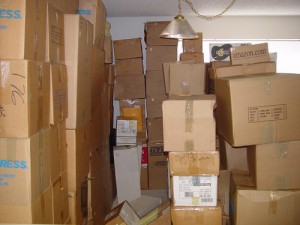
Rewriting a novel is like arriving at your new apartment right after the movers have dropped off all your stuff. Everything you need is in that huge mountain of boxes, only you have no idea where.

packing boxes

Yikes.

Making matters worse, your apartment is full of odd-shaped rooms. Where will the sectional look best? What about the treadmill?

You want to move the credenza into the living room, but you sense it’s too wide, and you’ll just end up dragging it back to the bedroom.

And that’s only one of a hundred items. It’s very easy to feel defeated.

There’s only one way to get started: grab a box and start unpacking. What that box is finished, grab another. And then another. And then another.

Eventually, you’ll figure out where everything belongs. And your rooms will fill up and begin looking like home.

Trust the process.  Trust yourself.

An Ultra-Challenge for July

Of all the months, July is THE BEST.  July is like hitting a bunch of green lights in a row.  It’s better than the smell of crayons.  It’s the Justin Timberlake of months.

I usually take the whole month off, rent a cabin surrounded by hills and trails, and just run.  Last year, near Collingwood, I logged 347 miles on the Bruce Trail.  The July before that, I covered 316 miles in the Haliburton Forest. The July before that I managed, well, only 272 miles, but that’s because I was running up and down mountains in France.

Running up "The Canigou" - near Perpignan, France

Running up “The Canigou” – near Perpignan, France

This July, I’ve set an even BIGGER challenge.  In addition to running 12 miles per day, I’m determined to write my second novel.

WHAT???  In a month?  Who does he think he is – Stephen King?

Actually, I don’t have to write it from scratch.  I wrote a first draft a couple of years ago, but then I set it aside, so I could work on my other book, which is, you know, actually getting published.

This July is the first chance I’ve had to go back to work on that other writing project.  It’s a big, messy, 60,000-word turd right now, but I’m excited about polishing it into a diamond.

So every day this July, in addition to burning 1000 calories on the trail, I’m hoping to produce 2000 words.  Words that glitter like spun glass, words that gleam like dragonflies in sunshine, words that shimmer like cobwebbed trees in summery skies

Okay, I’ll stop now.

This July, I’m also planning to: eat 30 salads, drink 30 cups of coffee, watch 30 sunsets, take 30 naps, and watch zero television shows.

Wish me luck!

My First Book Interview

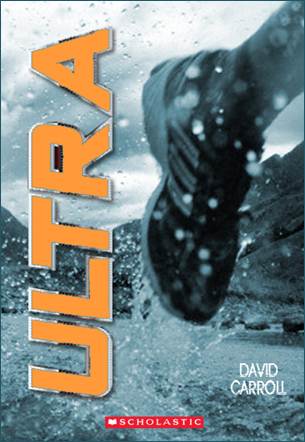
My novel is going to the printer TODAY.  Synchronize your watches – it’ll be hitting the bookstores in ten weeks.  

Ultra cover

I had my first book interview today.  Strange experience.  I work for the media, so for years, I’ve been the one asking the questions, not answering them.  Role reversal!

Still, it was fun to talk about these characters who’ve been making a racket inside my head for the last three years.

Here are the first five questions I was asked as an author:

Q: What is the best part of being an author?

I love that the gear is so cheap!  If I wanted to be a professional snowboarder, I’d have to spend hundreds of dollars on equipment.  The board, the boots, the bindings, the jacket…  Pricey!  But all an author needs is a pen and some paper.  What does that cost – maybe $5?

Also, I never get hurt, writing books.  That’s a definite plus for me.  If I was a hockey player in the NHL, I’d probably get hit a lot.  I’m a bit of a wimp when it comes to getting hit, so that wouldn’t be much fun.  As an author, the worst thing that can happen is I get a paper cut.

The best thing about being an author, however, is that the job is dead easy.  The alphabet only has 26 letters.  So all I have to do is arrange those letters in such a way that they tell a good story.  How hard could that be?

Q: What inspired you to write Ultra?

Five years ago, I did an insane thing.  I entered a hundred-mile footrace.  For 24 hours – all day and all night – I ran through a forest.  Some runners saw bears along the route, and all through the night I heard wolves howling in the distance.  It was a terrifying and exhausting experience.  But when I crossed the finish line, my life had changed.  I’d always thought it was impossible to run 100 miles in a day, but now that I’d done it, the whole world seemed different.  I’d changed the goalposts of what I believed was possible.  So I decided to try something else that I’d always thought was impossible – writing and publishing a novel.  And voila!

Q: What was the hardest part of writing this book?

Deciding whether or not the main character, Quinn, should win the race.  For the longest time, I had him crossing the finish line first.  But then I decided that he shouldn’t win; that something else – something dramatic – should happen instead.  So I rewrote the ending.  But then I gave the book to family members to read, and they complained about the ending.  So I rewrote it again, and then again.

I went back and forth, rewriting that ending for a year.  I can’t even remember anymore whether Quinn wins or loses the race.  But I will say this.  Most 100-mile races don’t give prizes to the winners.  Usually the winner just gets a pat on the back, a warm blanket, and a bowl of vegetable soup.  Almost nobody runs a 100-mile race in order to win.  They do it for other, much stranger reasons.

Q: In what ways are you like Quinn, the protagonist in your book?

I share Quinn’s determination.  Once I get an idea into my head, I’ll stick with it, no matter how much it hurts.  That’s why I can run 100 miles in one go.  Also, I love being outside, and I’m okay with being alone sometimes.  I’m a bit of an introvert, and I think Quinn is too.

And finally, like Quinn, I have a really solid friend.  And an amazing family that supports me – even when I do crazy things.

Q: What was your favourite book growing up?

“Swallows and Amazons” by Arthur Ransome.  It’s about a group of kids who climb mountains and race sailboats and survive shipwrecks and explore the high English moors.  Their parents are nowhere in sight, and the kids are always outdoors, facing the elements.  My dad read that book aloud for my whole family when I was a kid.  He’d read one chapter each night before bedtime, and the next morning me and my brother would race for the book so we could read on ahead.

“Swallows and Amazons” was the first in a long series, and Dad read us every single one over the course of a long, magical summer.  And that’s saying something, since there are twelve books in the series, and each one is 350 pages long.  Looking back, I think that experience cemented my love of reading.  Dad reading those books out loud.

Real Life Superheroes, Part 7

You’ve probably heard of exteme sports like base-jumping, free-running, and wake-boarding…

But have you heard of the greatest adrenaline rush of all?

Let me introduce you to…extreme ironing.

extreme ironing 1

Let’s face it. Everyone’s gotta iron. And ironing’s pretty boring.  So why not make ironing time more fun?

extreme-ironing-02

Welp!

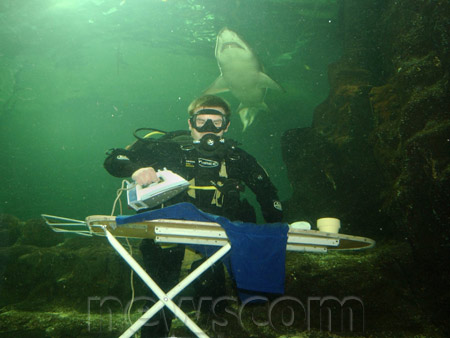
I’m a bit OCD, so this sport really speaks to me. You can do extreme ironing anywhere. Atop a mountain, on board a roller coaster, even at the bottom of the ocean.  All it has to be is…extreme.

extreme ironing 3

Uh…dude…there’s a shark above your head.

If you love challenging outdoor activities and the satisfaction of a well-pressed shirt, then extreme ironing is for you!

And guess what…  One of the stars of the sport is a 17 year-old kid.

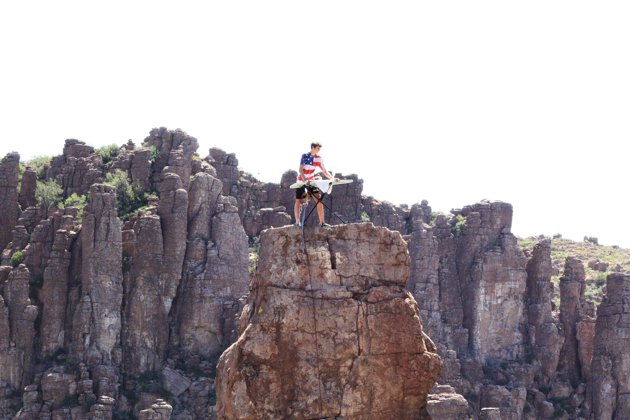
Most teenagers aren’t too fond of housework, but Kevin Krupitzer is an exception.  He’s particularly interested in removing creases from his clothes on top of weird rock formations near his home in Arizona.

Extreme_Ironing_4

My hero, the young Kevin Krupitzer

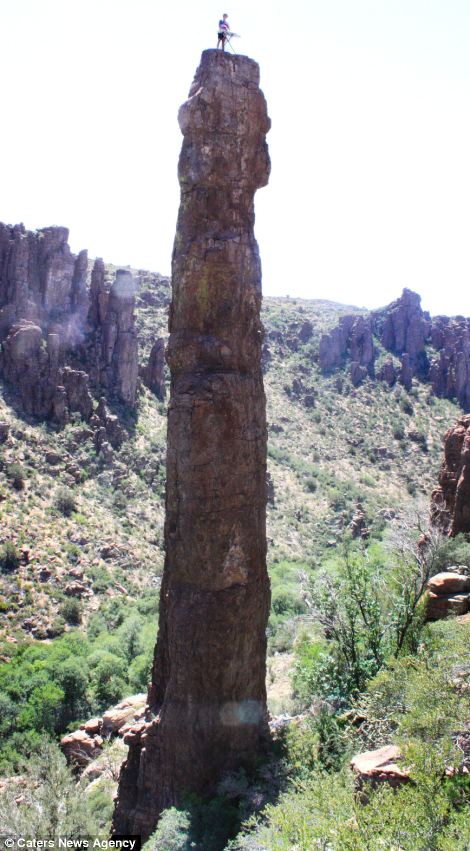
That doesn’t look too extreme, does it?  Wait a second…let me show you a wide shot:

Extreme ironing 5

No matter how peculiar your passions may be, the world is waiting to see you succeed.

Sweaty to Office Ready

A few Februaries ago, while standing on a streetcar, politely absorbing the cloud of germs radiating from the human flu cases all around me, I glanced out the window and had a revelation.

A happy-looking runner bounded up the sidewalk. A vapour trail of snow whorled behind her.

*Jan 19 - 00:05*Brilliant, I thought!  Why hadn’t I thought of it before?  Instead of suffering for hours on public transit, I could be running to work, and losing weight at the same time!

Ever since that revelation, I’ve been running to and from work every day.  I’m saving money on transit, I’m saving time, and my oxygen-rich blood has led to improved performance at work.

Still, I’ll be the first to admit that the running commute can be fraught with peril. Over the years I’ve been caught half-in and half-out of my spandex tights in the photocopy room.  I’ve been referred to as “Chicken Legs Carroll” at a staff meeting.  And I’ve been accused of “stinking up” workstations 2G208 through 2G212.

More on that latter item in a moment, but first, I’d like to address the most significant challenge facing the commuting runner: wardrobe planning.  Any casual runner is capable of keeping a spare shirt or two at the office.  But what about us addicts who run both to and from work, each and every day of the week?  To do this successfully, some planning is in order.

Once a week, I pack a duffel bag full of clean clothes and shlep it downtown. Three pairs of pants, three dress shirts, and four tee-shirts generally do the trick. I also leave a few items at work permanently – sports jacket, belts, a filing cabinet full of clean socks.

clothes pic

My filing cabinet holds all manner of fine toggery

It’s not a fail-safe plan.  Countless are the times I’ve grabbed a clean shirt, shoes, underwear and socks from my filing cabinet, and headed for the showers only to discover that I have no pants.

What the….WHERE ARE MY PANTS!?!

Ever sat through a board meeting in dri-fit shorts?

But maintaining a satellite wardrobe is only the half the battle.  It’s also critically important to be pre-emptive with one’s sweaty laundry.

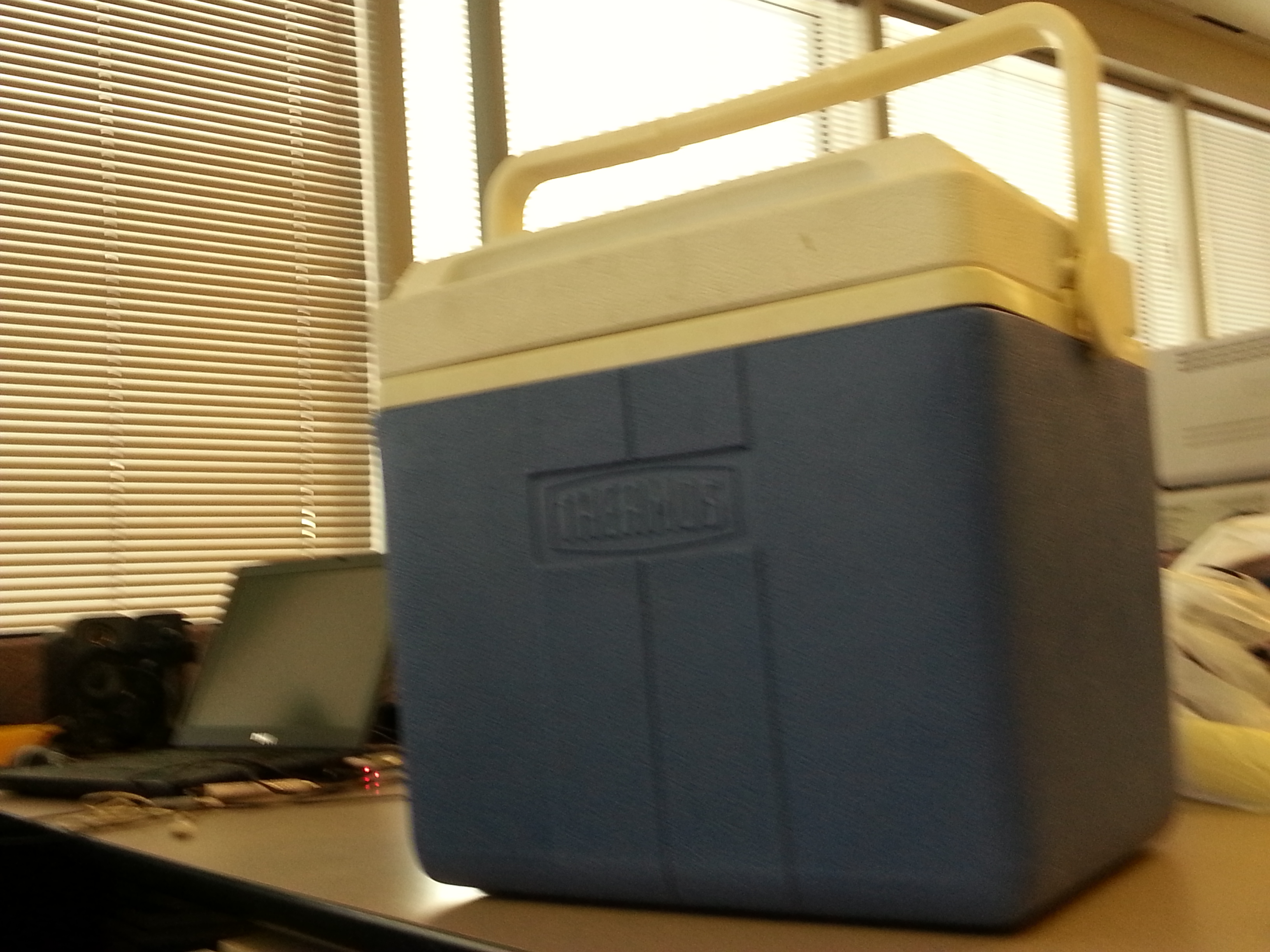
cooler pic

Hide-a-stench

For this, I look no further than my trusty Coleman cooler.  With its airtight seal, that baby can store up to 3 days worth of biological waste without emitting any foul smog.

Despite these precautions, I still get the occasional complaint from my neighbor at workstation 2G212.  I’m doing everything I can, but frankly, I think it’s time for our industry leaders to lend a hand.  If companies really want to attract health-conscious and carbon-neutral employees, they need to get ahead of the fitness curve.  I’m not talking about bike racks and shower rooms.  These days, those are the mere baseline.  I’m talking about lunch-hour massages, Gatorade and Clif shot energy gels in the vending machines, and most importantly, same-day dry cleaning service.

And would it really kill our bosses to keep an ironing board in the photocopy room?  I mean, c’mon!

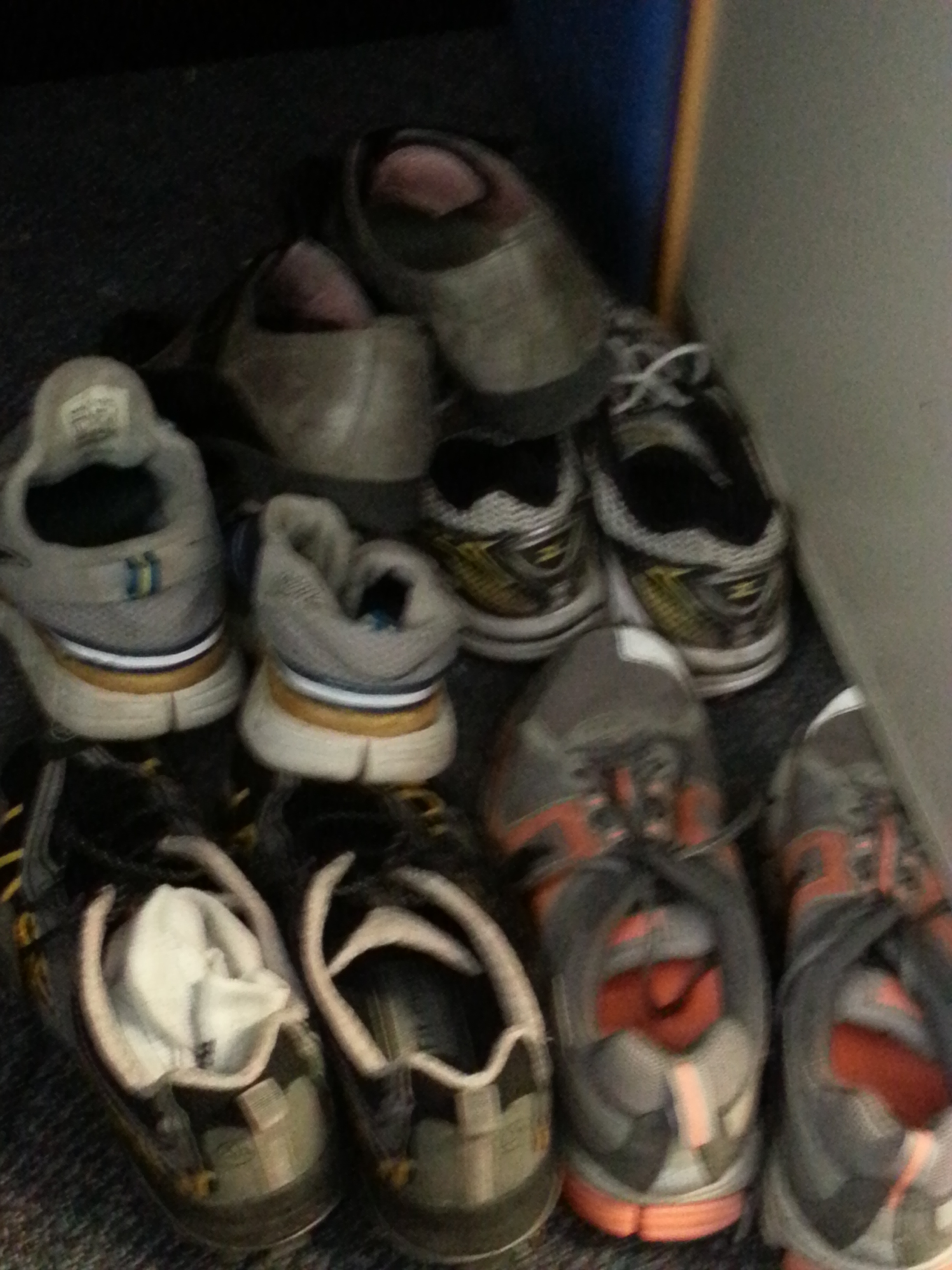
The evidence beneath my desk

The evidence beneath my desk

You’ll find a good article with tips on how to run-commute here.

In Every Race There is a Surprise, Part 2

I love running 100 mile races.  And one of my favourites takes place this month.

The Sulphur Springs Trail Run is held in the Dundas Valley Conservation Area in Southern Ontario.  The race follows a series of hard-pack trails that weave in and out of steep gorges carved thousands of years ago by retreating glaciers. Over the course of the 20-kilometer loop (which you run 8 times), you pass through dense Carolinian forests and wildflower-strewn meadows.

Sulphur Springs 09

Gorgeous

To answer your question, yes, there’s a bit of hill-climbing.  Over the course of the 100 miles, you have to gut your way up 4600 metres of elevation.  That’s like 8 CN towers stacked on top of each other.

Sadly, I won’t be running the race this year.  Instead, I’ll be working this mind-blowingly awesome music festival.  It’s a decent trade-off, but I’ll still be thinking about Sulphur Springs while I’m rocking out.  I’ve said before that every 100-mile race holds a surprise of some sort, and I’ve had more than my share in that particular race…

For instance.  Five years ago I was toeing the starting line with a hundred or so other runners.  It was late May, and it was six in the morning, and most of us were wearing headlamps.

Most – but not all.

“3…2…1…GO!” shouted the race director.

“Yaaaaaaaaa!” we runners yelled, charging heroically into the darkness.

We ran for maybe 30 seconds, down a gravel road toward the trailhead. Everyone jostled for position as the road got narrower, and soon we were funneling into a straight line.

Did I mention that it was dark?  That we were moving fast?

Soddenly, right in front of me, someone shouted: “Look out!  Look out!  Look out!”

The offending posts!

The offending posts

Four metal posts were sticking out of the ground.  They were two-and-a-half feet high.  Castration height.

“Look out! Look out! Look out!”

The crowd parted, and I slipped safely between the posts. The guy beside me wasn’t so lucky, and went down with a horror-movie scream.

IN EVERY RACE THERE IS A SURPRISE.

Poor guy.  He’d run all of 200 metres.

Happily, the following year, the starting line was moved to a different area of the park.  I have no idea if that was coincidental or not.

* * *

Running a hundred miles is not like running shorter distances.  In the 100 mile race, you don’t compete with other people.  You compete against yourself.  More precisely, you compete against your own mind.  You would think that your mind would be on your side in an endurance event.  But it is not.  Your mind is your worst enemy.  Your mind is on the side of your body, and your body wants nothing more than to go home, lie down in a hammock, and eat a bag of barbecue chips.

Oh sure, every now and again, your mind will say something nice to you, like: “The bath you take after this race sure is going to feel good!”  Or, “It sure is nice, being outside in the fresh air!”  But most of the time your mind says nasty things like: “You’re stupid for trying this; you should drop out and go home.”

That’s what my mind was saying to me a couple of years ago, when I was once again running Sulphur Springs.  I’d been running for 80-odd miles and it was the middle of the night and my mind was saying: “You are a stupid bloody fool.  Why are you doing this to yourself?”

HPIM3533

I’ll never forget finishing my 7th loop. At the turnaround, the volunteer lady gave me a high five and offered me a slice of pizza.  I declined, since I still had one final 20-kilometer loop to do.  “No you don’t,” she said.  “You’ve already done your 8.  Just look at the clipboard.”

I stared at the clipboard, and counted the laps.  She was right, I’d done 8, not 7 like I thought.

Which meant –

I WAS DONE!!!

Believe me when I tell you – that was the happiest moment of my life.  

Of course, later that day, the pain really set in.  I had a burning Achilles tendon, and I lost all feeling in six of my toes.  My calves and left shin were…hmmm, let me see.  What were they exactly?  Ah yes, they were a blinding wall of pain.  That’s right, that’s what they were.

On the bright side, I was given permission to use the physical disability washroom at work.  That handle on the wall beside the toilet was a godsend. 


Going Long. Too Long.

We runners love to set goals.  Drop a few pounds; shave a few minutes off a PR, improve our finishing kick.  We set expectations, and then we go out and exceed them.  Except for those rare occasions when we don’t.

A couple of years ago,  I decided to run 4000 kilometres.  Why 4000?  I’m not sure.  It felt like a big, braggable number.  And it was just slightly beyond my comfort zone.  Previously, the most I’d ever run in a year was 3500 kilometres.

A few facts about running 4000 kilometres:

In order to cover 4000 kilometres in a year, you must run 11k each and every day.

If you take a day off, you’ll need to run 22k on some subsequent day to make it up.

If you get sick, and miss a week of running, you’re on the hook for eighty clicks.

It quickly became clear that my whimsical little goal would require some careful planning.  I’d need to pay attention to diet, sleep, hydration, injury prevention, stretching, recovery, supplements, etc.  In short, I would need to become the most BORING person on the face of the planet.

I’m sorry to report, that’s exactly what happened.

I suffered injuries, I got sick, and I spent the entire year obsessively totaling my mileage.  As the months went by, I became more and more depressed.  I didn’t understand what was happening to me at the time, but I do now.  I spent the whole year staring at the odometer instead of the gorgeous scenery I was running past.

“You used to be a peddler of joy,” Shawna said towards the end of the year. “But you’ve turned into a fun vacuum.”

Haliburton10-8303

On the last day of the year, December 31st, I was 6 kilometer shy of my goal. I’d run 3994 kilometers in 364 days.  In the month of December alone, I’d run 600 kilometers.

It was a sunny and dry day, and there was no physical reason why I shouldn’t have pulled on my gear and dashed off the final 6 km to meet my goal.

And yet, I didn’t.

Why?

Years before, at a marathon, I’d seen a man cross the finish line, check his watch, and then yell – at the top of his lungs – the raunchiest  swear word known to humankind.  You know the one.  I pledged then and there that I would never become that guy; I would never put goals and numbers ahead of my love of the sport.

It was a tough decision to make, and I felt conflicted about it.  But later that night I went to a New Year’s party.  10 p.m. came and went, and not only was I still conscious; I was laughing and telling stories, and actually having fun for a change!  I was so bubbly, so full of spunk; I didn’t know what to make of myself.

“I can’t believe I’m awake,” I said to Shawna.

“Welcome back to the world,” she replied.

In Every Race There is a Surprise

Back in 2007, I met a hardcore trail-runner in Yellowknife.  He was as tough as the Canadian Shield, and skinnier than two toothpicks tied together.  He took me out for a run along the “highway to nowhere.”  As we ran, mile after mile, past the Giant Mine, where 9 men tragically lost their lives in an explosion 1992, he told about some of the running adventures he’d had over the years.  The animals he’d run into during long trail races (Grizzlies, wolverines), and the times he’d nearly broken ankles in the dark.  “You have to be prepared,” he said.  “In every race, there is a surprise.”

A couple of months later, I ran my first Ultra-marathon.  And he was right.  I got a BIG surprise.

The Niagara Ultra, at a mere 50 kilometers, is the Maggie Simpson of Ultra-marathons.  Still, it’s 8 kilometers longer than a conventional marathon, which seemed like a big leap to me at the time.

I drove down to Niagara-on-the-Lake at 4:30 a.m. on a June morning, got my BIB (#105) and sat in the Kinsmen Hall in my singlet and shorts, trying to stay warm until the race began.  The forecast was calling for clear, cool weather.  The sun rose over the Niagara River while Huey Lewis and the News sang about “The Power of Love” on the radio.

At 6:45 I went outside and joined the other runners.  There were maybe 100 of us standing about on a grassy field, rubbing our arms for warmth.  A stern man outlined the route and thanked the various local sponsors.  Then suddenly he said, “Is everyone ready?  Okay then, GO!”

There was no count-down clock and no pumping music.  Suddenly the hundred of us were running across the dewy meadow.

Things happened very fast.  The pack merged onto the Niagara Parkway path; a recreational trail that snakes alongside the Niagara River.  We were to run from Lake Ontario in the north to the great falls in the south, and then back again.  The crowd of runners quickly thinned out, and I got into a groove.

virtual-tour-79336-01-1335331793

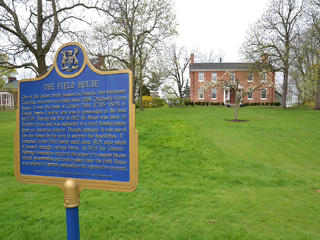
The asphalt trail was shaded by mature oaks and elms.  Shortly after the first aid station, I ran past the Field House, the stately brick home General Brock used as his headquarters during the War of 1812.  More importantly, it was where my beloved Gran lived for many years, and where I spent many Christmases and Sunday dinners.

But there was no time for nostalgia – I had a race to run!  I climbed the Niagara Escarpment to the hamlet of Queenston, ran past the floral clock, the hydro electric plant where the Niagara river thins out, and the lush green golf courses.  I banked the first 10 kilometers in 46 minutes, which seemed a dangerously fast pace for me at the time.  At the 15k aid station a volunteer told me that I was in seventh place.  Seventh!  Never in my life had I ever been in seventh place for anything!

Unfortunately, this was not my only surprise in this race.  A much worse revelation was yet to come.

I ran into the city of Niagara Falls.  No roads had been closed for this race, and there weren’t any police officers to hold back traffic.  Runners were expected to follow the sidewalks, and obey traffic signals.  Since it was now 9 a.m. on a sunny June morning, I found myself dodging tourists with cameras, jumping over “Maid of the Mist” turnstiles, and waving at curious honeymooners.

Niagara Falls

And then, there it was.  Niagara Falls.  I’d grown up just down the road, and had visited the falls any number of times, and yet, on this morning it looked more beautiful than ever before.  I wanted to stop and stare at the falls.  But I didn’t.  My 7th place was on the line.

At the turnaround I downed a cup of Gatorade, and doubled back towards Niagara-on-the-Lake, passing the runners immediately in my wake.  The bulk of the pack was roughly 5 k behind me.

I swallowed one gel at the 25 k turnaround, and another at 35 k.  Hydration was not a problem.  But – SURPRISE – my bowels were.

Yes.  The B word.  I could feel the pressure starting to build.  It became quite a distraction, and I kept my eyes peeled for a porta-potty.

At the 40 kilometer mark I was still clinging to 7th place, but a guy named Doug kept catching up to me whenever I stopped to talk to the volunteers at the aid stations.  “Bathroom?” I’d say.  They’d shake their heads, no.  Doug would roll in behind me, and I’d sprint off again.

A couple of times, Doug got ahead of me.  Each time he came across a paper cup that someone had discarded on the road, he’d bend down, pick it up, and carry it to the garbage can at the next aid station.  He did this over and over again.  After a while, I started doing it too.  At big city races, there are hundreds of volunteers to clean up after the racers, but in a small race like this, it made sense to clean up after ourselves.

Of course, it wasn’t easy to bend down after having run 40k – especially now, when most of my strength was going into holding my butt cheeks clenched together.

At 46k, Doug passed me for good.  I was fighting off waves of gastric pain, and I could barely run anymore.  And so, with 4 kilometers left to run, and no relief in sight, I succumbed to the inevitable.  I jumped off the path, scrambled down the side of the gorge into the forest, and squatted.

While I took care of business in the gorge, I could hear runner after runner springing past me on the path above.  My 7th place was long gone.  But I didn’t care.  I was feeling fine. 

I’m sorry to tell you a story involving poop.  But there’s no way around it.  Bodily functions, and learning how to deal with them, is a big part of ultra-running.  You can’t expect to run for 6, 12, or 24 hours at a time, and not have to think about the food that goes in, or comes out of your body.  It’s life.

Happily, I learned a couple of things from that “surprise.”  For instance: don’t eat any dairy products in the 24 hours leading up to a race.  For me, that usually prevents unwanted bathroom breaks.

I also learned to always run with toilet paper.  And to never shake hands with an ultra-runner at the finish line – at least until you’ve both washed your hands.

The Niagara Ultra-marathon takes place Saturday, June 22nd.  You can find out more about it HERE.
Real Life Superheroes, Part 2

Take a look at the runners in these pictures.  Can you tell what makes them all special?

First, there’s America’s Dick Beardsley (on the left):

Dick+Beardsley+and+Inge+Simonsen+finish+the+London+Marathon+together.+Horace+Culter+of+the+Greater+London+council+one+of+the+men+who+made+this+race+possible+watches+on+in+the+background

Up next, Spain’s Fernandez Anaya (in green):

o-FERNANDEZ-ANAYA-570

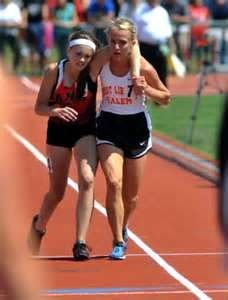
And finally, Ohio track star Meghan Vogel (blonde hair, on the right):

Meghan Vogel

Any guesses?  Yes, they’re all runners, and yes, they’re crazy fit.  They probably run 100+ miles a week and eat nothing but salads and nuts.  But these incredibly healthy human specimens have something much more interesting – and much more valuable – in common.

You’ve got fifteen seconds to figure it out.  Tick tick tick tick tick…TIME’S UP!

ANSWER: All of these runners are real-life superheroes.  They’re not only fast.  They’re also super kind.

Take Meghan Vogel.  She was competing in her third race of the day.  Ahead of her, a runner crumpled to the ground in the heat.  But instead of dashing past her, she lifted her up, helped her to the finish line, and literally pushed her across the finish line.

Fernandez Anaya (the guy in the green shirt) was equally generous.  He was running second in his race, a ways behind the race leader, Abel Mutai.  As he entered the finishing straight, Fernandez noticed Mutai pull up about 10 metres before the finish line.  Mutai thought he’d crossed the finish line, BUT HE HADN’T!  He still had 30 feet left to go!

Instead of racing past Mutai for the win, Fernandez slowed down and gestured at him to keep running.  He literally helped the OTHER guy win.

Which brings me to the black and white photo of Dick Beardsley at the top.  Dick was running the very first London marathon in 1981.  He and Norway’s Inge Simonsen spent the race battling for first place.  In the finishing stretch, instead of trying to prove who was better than the other, the athletes clasped hands and crossed the finish line together.

How awesome is that?  They acknowledged they were evenly matched, and split the first place prize two ways.

Someone should show these videos to Lance Armstrong.