Real Life Superheroes, Part 2

Take a look at the runners in these pictures.  Can you tell what makes them all special?

First, there’s America’s Dick Beardsley (on the left):

Dick+Beardsley+and+Inge+Simonsen+finish+the+London+Marathon+together.+Horace+Culter+of+the+Greater+London+council+one+of+the+men+who+made+this+race+possible+watches+on+in+the+background

Up next, Spain’s Fernandez Anaya (in green):

o-FERNANDEZ-ANAYA-570

And finally, Ohio track star Meghan Vogel (blonde hair, on the right):

Meghan Vogel

Any guesses?  Yes, they’re all runners, and yes, they’re crazy fit.  They probably run 100+ miles a week and eat nothing but salads and nuts.  But these incredibly healthy human specimens have something much more interesting – and much more valuable – in common.

You’ve got fifteen seconds to figure it out.  Tick tick tick tick tick…TIME’S UP!

ANSWER: All of these runners are real-life superheroes.  They’re not only fast.  They’re also super kind.

Take Meghan Vogel.  She was competing in her third race of the day.  Ahead of her, a runner crumpled to the ground in the heat.  But instead of dashing past her, she lifted her up, helped her to the finish line, and literally pushed her across the finish line.

Fernandez Anaya (the guy in the green shirt) was equally generous.  He was running second in his race, a ways behind the race leader, Abel Mutai.  As he entered the finishing straight, Fernandez noticed Mutai pull up about 10 metres before the finish line.  Mutai thought he’d crossed the finish line, BUT HE HADN’T!  He still had 30 feet left to go!

Instead of racing past Mutai for the win, Fernandez slowed down and gestured at him to keep running.  He literally helped the OTHER guy win.

Which brings me to the black and white photo of Dick Beardsley at the top.  Dick was running the very first London marathon in 1981.  He and Norway’s Inge Simonsen spent the race battling for first place.  In the finishing stretch, instead of trying to prove who was better than the other, the athletes clasped hands and crossed the finish line together.

How awesome is that?  They acknowledged they were evenly matched, and split the first place prize two ways.

Someone should show these videos to Lance Armstrong.

“We Can Always Do Anything”

It’s time for another INSPIRATIONAL THURSDAY!

And I’ll start it off with a question.  Is it really possible for a 13 year-old to run a 100-mile race?

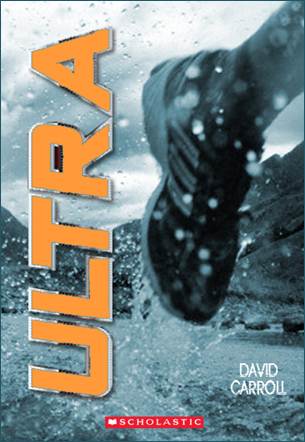
Ultra coverI get that question all the time, since that’s what my book is about: a kid who runs the longest of ultra-marathons in an attempt to outrun a tragic family secret.

Is such a thing actually possible?

HECK YEAH!

Of course, I don’t actually know any 13 year-olds who have successfully completed a 100-mile race.   But it wouldn’t surprise me in the least if they had.  Kids are capable of ANYTHING.  There are kids out there who’ve run multiple marathons, and kids who have swum across great lakes.

And then there’s Conner and Cayden Long, who take the word inspiration to a whole new level:

“We can always do anything.”  Love that.

The Re-write Blues

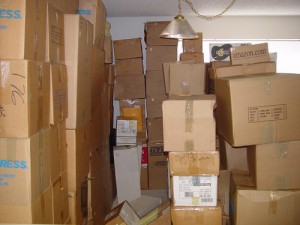
Rewriting a novel is like arriving at your new apartment right after the movers have dropped off all your stuff. Everything you need is in that huge mountain of boxes, only you have no idea where.

packing boxes

Yikes.

Making matters worse, your apartment is full of odd-shaped rooms. Where will the sectional look best? What about the treadmill?

You want to move the credenza into the living room, but you sense it’s too wide, and you’ll just end up dragging it back to the bedroom.

And that’s only one of a hundred items. It’s very easy to feel defeated.

There’s only one way to get started: grab a box and start unpacking. What that box is finished, grab another. And then another. And then another.

Eventually, you’ll figure out where everything belongs. And your rooms will fill up and begin looking like home.

Trust the process.  Trust yourself.

An Ultra-Challenge for July

Of all the months, July is THE BEST.  July is like hitting a bunch of green lights in a row.  It’s better than the smell of crayons.  It’s the Justin Timberlake of months.

I usually take the whole month off, rent a cabin surrounded by hills and trails, and just run.  Last year, near Collingwood, I logged 347 miles on the Bruce Trail.  The July before that, I covered 316 miles in the Haliburton Forest. The July before that I managed, well, only 272 miles, but that’s because I was running up and down mountains in France.

Running up "The Canigou" - near Perpignan, France

Running up “The Canigou” – near Perpignan, France

This July, I’ve set an even BIGGER challenge.  In addition to running 12 miles per day, I’m determined to write my second novel.

WHAT???  In a month?  Who does he think he is – Stephen King?

Actually, I don’t have to write it from scratch.  I wrote a first draft a couple of years ago, but then I set it aside, so I could work on my other book, which is, you know, actually getting published.

This July is the first chance I’ve had to go back to work on that other writing project.  It’s a big, messy, 60,000-word turd right now, but I’m excited about polishing it into a diamond.

So every day this July, in addition to burning 1000 calories on the trail, I’m hoping to produce 2000 words.  Words that glitter like spun glass, words that gleam like dragonflies in sunshine, words that shimmer like cobwebbed trees in summery skies

Okay, I’ll stop now.

This July, I’m also planning to: eat 30 salads, drink 30 cups of coffee, watch 30 sunsets, take 30 naps, and watch zero television shows.

Wish me luck!

My First Book Interview

My novel is going to the printer TODAY.  Synchronize your watches – it’ll be hitting the bookstores in ten weeks.  

Ultra cover

I had my first book interview today.  Strange experience.  I work for the media, so for years, I’ve been the one asking the questions, not answering them.  Role reversal!

Still, it was fun to talk about these characters who’ve been making a racket inside my head for the last three years.

Here are the first five questions I was asked as an author:

Q: What is the best part of being an author?

I love that the gear is so cheap!  If I wanted to be a professional snowboarder, I’d have to spend hundreds of dollars on equipment.  The board, the boots, the bindings, the jacket…  Pricey!  But all an author needs is a pen and some paper.  What does that cost – maybe $5?

Also, I never get hurt, writing books.  That’s a definite plus for me.  If I was a hockey player in the NHL, I’d probably get hit a lot.  I’m a bit of a wimp when it comes to getting hit, so that wouldn’t be much fun.  As an author, the worst thing that can happen is I get a paper cut.

The best thing about being an author, however, is that the job is dead easy.  The alphabet only has 26 letters.  So all I have to do is arrange those letters in such a way that they tell a good story.  How hard could that be?

Q: What inspired you to write Ultra?

Five years ago, I did an insane thing.  I entered a hundred-mile footrace.  For 24 hours – all day and all night – I ran through a forest.  Some runners saw bears along the route, and all through the night I heard wolves howling in the distance.  It was a terrifying and exhausting experience.  But when I crossed the finish line, my life had changed.  I’d always thought it was impossible to run 100 miles in a day, but now that I’d done it, the whole world seemed different.  I’d changed the goalposts of what I believed was possible.  So I decided to try something else that I’d always thought was impossible – writing and publishing a novel.  And voila!

Q: What was the hardest part of writing this book?

Deciding whether or not the main character, Quinn, should win the race.  For the longest time, I had him crossing the finish line first.  But then I decided that he shouldn’t win; that something else – something dramatic – should happen instead.  So I rewrote the ending.  But then I gave the book to family members to read, and they complained about the ending.  So I rewrote it again, and then again.

I went back and forth, rewriting that ending for a year.  I can’t even remember anymore whether Quinn wins or loses the race.  But I will say this.  Most 100-mile races don’t give prizes to the winners.  Usually the winner just gets a pat on the back, a warm blanket, and a bowl of vegetable soup.  Almost nobody runs a 100-mile race in order to win.  They do it for other, much stranger reasons.

Q: In what ways are you like Quinn, the protagonist in your book?

I share Quinn’s determination.  Once I get an idea into my head, I’ll stick with it, no matter how much it hurts.  That’s why I can run 100 miles in one go.  Also, I love being outside, and I’m okay with being alone sometimes.  I’m a bit of an introvert, and I think Quinn is too.

And finally, like Quinn, I have a really solid friend.  And an amazing family that supports me – even when I do crazy things.

Q: What was your favourite book growing up?

“Swallows and Amazons” by Arthur Ransome.  It’s about a group of kids who climb mountains and race sailboats and survive shipwrecks and explore the high English moors.  Their parents are nowhere in sight, and the kids are always outdoors, facing the elements.  My dad read that book aloud for my whole family when I was a kid.  He’d read one chapter each night before bedtime, and the next morning me and my brother would race for the book so we could read on ahead.

“Swallows and Amazons” was the first in a long series, and Dad read us every single one over the course of a long, magical summer.  And that’s saying something, since there are twelve books in the series, and each one is 350 pages long.  Looking back, I think that experience cemented my love of reading.  Dad reading those books out loud.

The Skeleton in my Closet

Did I mention that I work for Canada’s public broadcaster?

It’s awesome. Not only am I surrounded by brilliant and spunky people, but I get to climb around in Casey and Finnegan’s tree-house every single morning.

Casey's Treehouse

But things are always changing at the CBC, and recently, due to budgetary challenges, it was announced that our (formerly commercial-free) national music service will soon begin airing 4 minutes of commercials per broadcast hour.

It’s a siesmic shift. Nobody wants commercials cluttering up the airwaves, but the possible alternatives (show cancellations? endless re-runs of dusty radio dramas? dismantling the transmitters and selling the iron for scrap?) would likely drive even more listeners away.  So commercials it is.

I’m just hoping nobody learns about my past.

Back in my early-twenties, I wrote commercials for a small-town radio station.  I could churn out anywhere between 20 and 25 thirty-second spots per day. I wrote radio ads for funeral homes, steak houses, furriers, gentlemen’s clubs, used car lots, you name it. I was shameless, and I had a special knack for writing slogans.

One day, however, my copywriting superpowers deserted me. The results were disastrous. Check out this slogan I wrote for a flooring company – a company with the unusual name of Feel Fooring:

“For floors with feeling, feel free to phone Feel Flooring.”

Yes, I actually wrote that sentence.  Forgive me. It was the end of a long day, and I’d written 30 spots already. I was, as they say, out of juice.

Back in those days, once you’d written a commercial, you had to call up the client to get them to approve your copy.  It could be a humiliating experience; reading your well-crafted commercial over the phone, and then having it ripped to shreds by some dude who sold, I don’t know, chain saws for a living.

As I read that goofy Feel Flooring spot over the phone, I kept thinking NO WAY is Mr. Feel Flooring going to go for this.

“For floors with feeling feel free to phone Feel Flooring.”

I gave it my very best delivery.  And to my shock and horror, the copy was approved! The commercial began running the very next day.

If you lived in the greater Espanola area during the early nineties, and spent any time listening to the radio, then I sincerely apologise.

On the bright side, that commercial won me the employee-of-the-month award. 50 bucks!

Real Life Superheroes, Part 7

You’ve probably heard of exteme sports like base-jumping, free-running, and wake-boarding…

But have you heard of the greatest adrenaline rush of all?

Let me introduce you to…extreme ironing.

extreme ironing 1

Let’s face it. Everyone’s gotta iron. And ironing’s pretty boring.  So why not make ironing time more fun?

extreme-ironing-02

Welp!

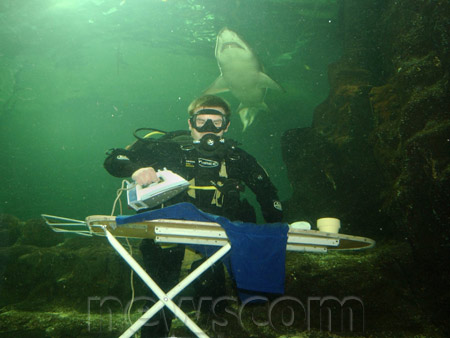
I’m a bit OCD, so this sport really speaks to me. You can do extreme ironing anywhere. Atop a mountain, on board a roller coaster, even at the bottom of the ocean.  All it has to be is…extreme.

extreme ironing 3

Uh…dude…there’s a shark above your head.

If you love challenging outdoor activities and the satisfaction of a well-pressed shirt, then extreme ironing is for you!

And guess what…  One of the stars of the sport is a 17 year-old kid.

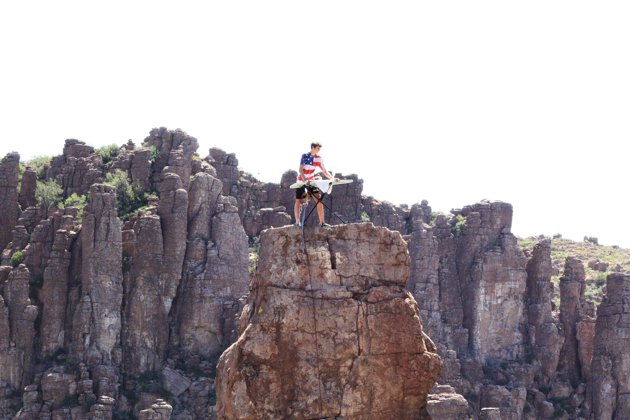
Most teenagers aren’t too fond of housework, but Kevin Krupitzer is an exception.  He’s particularly interested in removing creases from his clothes on top of weird rock formations near his home in Arizona.

Extreme_Ironing_4

My hero, the young Kevin Krupitzer

That doesn’t look too extreme, does it?  Wait a second…let me show you a wide shot:

Extreme ironing 5

No matter how peculiar your passions may be, the world is waiting to see you succeed.

The Man Who Forgot He Wrote a Book

Crazy story – about my talented friend Tim. A warning, though: Tim is successful at, like, everything. He’s an award-winning journalist. Plays violin like Nigel Kennedy. Bakes the most mouth-catering cakes.

Cars_Cake

These days, Tim spends most of his time writing children’s books.  But it’s a career that almost never happened.

childrens books

Here’s how it came about. A few years ago, Tim’s niece came up for a visit from Colorado. During her stay, she reminded Tim of a poem that he’d written many years before.

“What poem?” said Tim.

She reminded her Uncle of the poem he’d written for her as a gift, back when she was a little girl. A poem about a frog who is appalled to learn that that not all animals share his love of spiders and bugs.

Tim’s niece took the poem to school. Her elementary teacher loved it and read it aloud for the class.

The class, predictably, LOVED the poem. And so, for years, that teacher went on performing it.  An entire generation of Colorado kids grew up on Tim’s poem about the frog – and Tim didn’t even know!

Not long after the niece went back home to Colorado, Tim was telling a group of us about this story. We were at a friend’s book launch, and a literary editor happened to be standing nearby.  It’s a good thing Tim has a loud speaking voice because the editor overheard the story, and asked to see the poem. And presto! That poem got turned into a book.

The book sold a lot of copies. So Tim was asked to write a sequel. That one sold well too, so a third book was requested. It’s coming out in November, with a fourth book already in production.

And it all began from a poem that Tim forgot that he’d written!

What writer doesn’t have dreams like this? That at some point in our scribbly past, we wrote a brilliant poem, or short story, or novel, and forgot all about it? Lord knows we’ve got enough journals and floppy discs and thumb drives full of forgotten writing lying around… Surely, somewhere among all those literary droppings there’s gotta be something  worth publishing, right?

Quite possibly.

As this wonderful story also attests.

Sweaty to Office Ready

A few Februaries ago, while standing on a streetcar, politely absorbing the cloud of germs radiating from the human flu cases all around me, I glanced out the window and had a revelation.

A happy-looking runner bounded up the sidewalk. A vapour trail of snow whorled behind her.

*Jan 19 - 00:05*Brilliant, I thought!  Why hadn’t I thought of it before?  Instead of suffering for hours on public transit, I could be running to work, and losing weight at the same time!

Ever since that revelation, I’ve been running to and from work every day.  I’m saving money on transit, I’m saving time, and my oxygen-rich blood has led to improved performance at work.

Still, I’ll be the first to admit that the running commute can be fraught with peril. Over the years I’ve been caught half-in and half-out of my spandex tights in the photocopy room.  I’ve been referred to as “Chicken Legs Carroll” at a staff meeting.  And I’ve been accused of “stinking up” workstations 2G208 through 2G212.

More on that latter item in a moment, but first, I’d like to address the most significant challenge facing the commuting runner: wardrobe planning.  Any casual runner is capable of keeping a spare shirt or two at the office.  But what about us addicts who run both to and from work, each and every day of the week?  To do this successfully, some planning is in order.

Once a week, I pack a duffel bag full of clean clothes and shlep it downtown. Three pairs of pants, three dress shirts, and four tee-shirts generally do the trick. I also leave a few items at work permanently – sports jacket, belts, a filing cabinet full of clean socks.

clothes pic

My filing cabinet holds all manner of fine toggery

It’s not a fail-safe plan.  Countless are the times I’ve grabbed a clean shirt, shoes, underwear and socks from my filing cabinet, and headed for the showers only to discover that I have no pants.

What the….WHERE ARE MY PANTS!?!

Ever sat through a board meeting in dri-fit shorts?

But maintaining a satellite wardrobe is only the half the battle.  It’s also critically important to be pre-emptive with one’s sweaty laundry.

cooler pic

Hide-a-stench

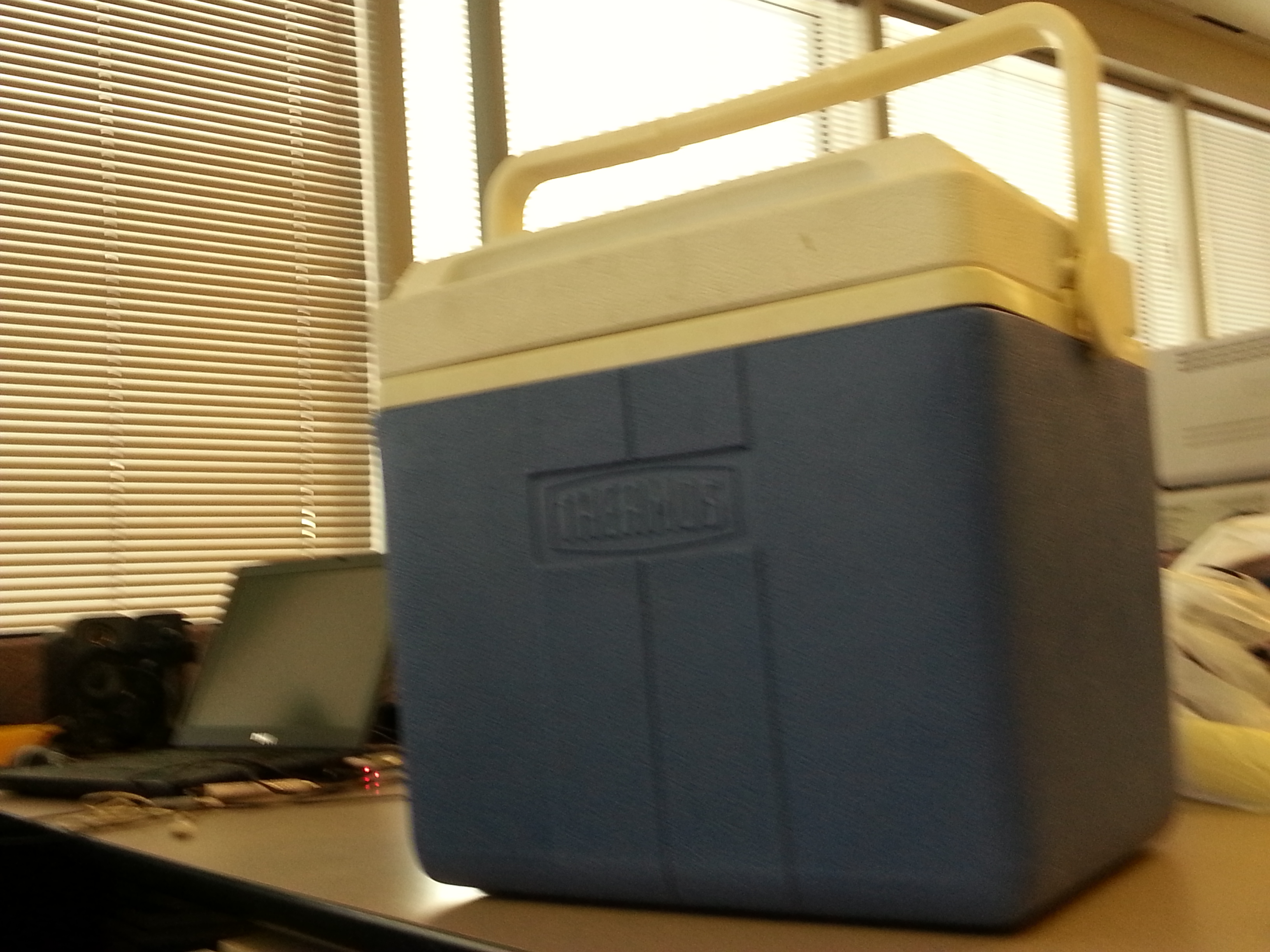
For this, I look no further than my trusty Coleman cooler.  With its airtight seal, that baby can store up to 3 days worth of biological waste without emitting any foul smog.

Despite these precautions, I still get the occasional complaint from my neighbor at workstation 2G212.  I’m doing everything I can, but frankly, I think it’s time for our industry leaders to lend a hand.  If companies really want to attract health-conscious and carbon-neutral employees, they need to get ahead of the fitness curve.  I’m not talking about bike racks and shower rooms.  These days, those are the mere baseline.  I’m talking about lunch-hour massages, Gatorade and Clif shot energy gels in the vending machines, and most importantly, same-day dry cleaning service.

And would it really kill our bosses to keep an ironing board in the photocopy room?  I mean, c’mon!

The evidence beneath my desk

The evidence beneath my desk

You’ll find a good article with tips on how to run-commute here.

Writing is my AEIOU and Sometimes Y

Note to self: kids are really smart.

Case in point.  The other day I got interviewed by a grade 10 student.  He needed to dissect a living writer for a class project, and somehow, poor guy, he got saddled with me.  We went for a coffee, and then I dragged him into a radio studio  (the same studio, I should add, where the fabled literary broadcaster, Eleanor Wachtel, conducts all of her interviews).  The student pulled out his iPhone, pressed record, and placed it on the desk between us. He asked me some very good questions – about writing, working in the field of journalism, how much education is needed to get a job in broadcasting, and how to build a career as a fiction writer.

He gave me a real grilling.  And then, near the end of our discussion, he asked me this: “Knowing what you know now, if you had to go back and do it all over again, would you still set out to be a fiction writer?”

OMG.  He had me.  I froze.

As a seasoned interviewer, I usually love moments like this.  The moment when a question hits the bulls-eye, and you can see your guest squirming, because he or she has secretly been asking him or herself the exact same question – possibly for years.

What to do, what to do... (1)

If I had to go back and do it again, would I still set out to become a fiction writer?  I had to hand it to the student – his random drilling had hit a geyser.

“Do you want me to be completely honest?” I asked.

The student grinned from ear to ear.  “Of course,” he said.

No way, I thought to myself, I’d avoid writing like the plague.  It’s nothing but an endless road of pain!  

Want proof?  I wrote my first novella more than 2 decades ago.  It never got published.  Neither did the two novels I wrote after that.   And of the 100+ short stories I composed after that, only a handful made it to print.

NO, DAVE.  BE HONEST.  3 GOT PUBLISHED.  ONLY 3.  And the money I earned from them didn’t even cover the cost of the printer ink and stamps!

If someone had sat me down back in 1990 and done the calculus; if they’d explained how hard I’d have to work, how many hours of sleep I’d lose, how much my arteries would harden, how awkward I’d feel each time a friend asked how my book was coming along…  If someone had told me all that two decades ago, would I still have gone into writing?  No, probably not.  You’d have to be crazy to embrace a career like that.

It’s one of the great mercies of the universe that I didn’t know the odds I was facing when I started out.  This isn’t limited to writing.  If any of us truly knew how much heartache was in store for us, we’d never do anything.  If we knew how hard it would be to maintain relationships, we’d never allow ourselves to fall in love.  If my parents had warned me about the skinned knees I’d get while learning to ride a bike, I never would’ve let them take my training wheels off.

Signs of spring

I still hadn’t answered the student’s  question.  Sensing my difficulty, he shifted gears.  “How about this,” he said at last,  “what has writing given you?”

The question was a relief, and I was flooded with good memories.  I started rhyming off the list: writing gave me a purpose in life, it gave me the career I now enjoy, it helps pay my mortgage, it stills my mind during stressful times.

Writing is my sun and my moon.  It is my breakfast, lunch and dinner.  It is my AEIOU and sometimes Y.

And in spite of all those rejections I mentioned earlier, writing eventually did make my dream come true.

Ultra cover