Why Run? Why Write?

010-funny-animal-gifs-running-duck

Why do I run?

Because running is my church.

Because it helps me figure out what I think about the world.

Because I love buying running shoes.

Because I like being alone sometimes.

Because running helps me sleep well.

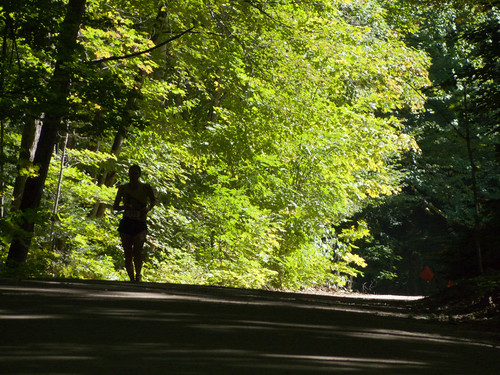
Because I run past interesting things.  Bears, beaver dams, hidden valleys.

Running

Why do I write?

Because writing is my church.

Because it helps me figure out what I think about the world.

Because I love buying new journals.

Because I like being alone sometimes.

Because writing helps me sleep well.

Because I get to write about interesting things.  Bears, floating islands, secret valleys where time stands still.

What to do, what to do... (1)

HAT TIP: above two photos taken by my talented brother, Andy.


To DNF or Not to DNF?

Warning: a graphic picture of my feet appears in this post.

But first, a very pleasant image:
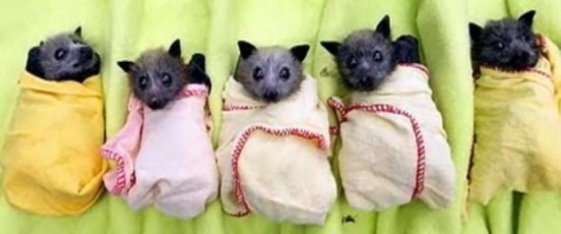
r-BABY-BATS-large570

A bunch of baby bats, wrapped up in little blankets.  I don’t know why they’re wrapped up like that.  Maybe they were cold and wet.  Just like me, last September…

***

I already mentioned that I run 100-mile races, right?  That once or twice a year I go to some remote forest, line up with a bunch of crazy people, and run without sleeping for 24+ hours.

It’s a weird sport called ultra-running.  I’ve run a dozen or so of these ultra-marathons in the last five years.

Every single time, I finished successfully.  Until September 2012.  When I ultra-failed.

The Haliburton Forest Trail Run is held at the Haliburton Wildlife Reserve; a sustainable forest tucked into the armpit of Algonquin Park.  You run 25 miles out into the heart of the forest, then you turn around and run 25 miles back.  And then you do the whole thing OVER AGAIN.

Here’s what the starting line looked like at 5:59 a.m.

At the starting line

This is how it looked 90 seconds later:

6 AM, and they're off

One hundred miles. 160 kilometers. Half a million strides. Starting NOW.

The race took place September 8, 2012 which, in case you’ve forgotten, was a rainy day. Very rainy, come to think of it.  It rained for eighteen hours before the race began, and then, for good measure, it rained another 12 hours while the race was happening.  This created a lot of mud.

Here I am at the 50 mile turnaround:
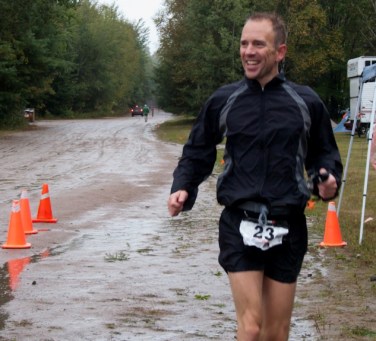
David Haliburton 2012

I look happy, don’t I?  Don’t be fooled.  I’d been running for ten hours, and I was far from happy.  I was…what’s the word….oh yeah – UNHAPPY.

Everyone was in pain out there.  At mile 54, I caught up with a young guy named Pablo.  Pablo was having trouble with his hip, and he squinted with every step he took.  He wasn’t giving up, though.   “Pain equals learning,” he told me.  “If you aren’t feeling any pain, then you’re not learning anything.”

The rain finally stopped, and darkness fell.  At the 68-mile checkpoint I pulled on my headlamp.  I ran for two miles, then noticed that the light was flickering.  Cheap Dollar Store batteries!  I ran two miles back to the aid station and picked up my spares.  These worked fine, but I’d had to run four miles out of my way.

(2nd warning – that picture of my feet is coming soon!)

I reached the 75-mile checkpoint by 11pm, which meant I still had a shot at finishing the race in 24 hours.  Shawna surprised me at the aid station.  She fed me yogurt-covered raisins and salted yams, and told me that I looked surprisingly good, considering the circumstances.

Luckily, she didn’t ask to see my feet.
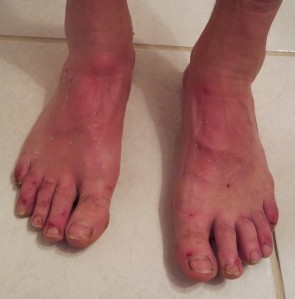
Dave's gnarly feet 1

Those are the tops of my feet.  Believe me, you don’t want to see the bottoms.

Remember, I’d been running through muddy oil-slicks for 17 hours straight.  I probably should have changed shoes and socks and greased my feet with Vaseline, but that would have taken an extra twenty minutes (it takes a lot of time to perform these seemingly simple manoeuvres when you’re wet and cold from 17 hours of running).

I ran on.  I made it to the 85 mile checkpoint, but then things started to fall apart.  At the top of a hill, I saw a two-storey marble sculpture of a rabbit.  I ran closer and realized it wasn’t a marble sculpture at all, but a tree.  I became dizzy.  My feet were SCREAMING with pain.  So was the chafing on my, er, undercarriage.  I slowed down to a walk.  And then, without the heat generated from the running, my body temperature plummeted.

I was wearing three layers of clothes, plus a running jacket and tights, but it wasn’t enough.  The temperature dipped down to 5 degrees, and I began shivering uncontrollably.  I could barely hike the hills I’d pranced up earlier in the day.  A germ of an idea took root in my mind.  You don’t have to finish if you don’t want to, it said.

It’s called a DNF, and it stands for Did Not Finish.  I’d never DNF’d in my life.

But the pain in my feet was getting worse and it felt like my butt cheeks were being ripped to shreds with every step.  The germ solidified in my mind.

And so, at 3 a.m., after running 89 miles (which was actually 93 if you count the extra miles I ran to get my spare batteries), I did something truly crazy.  At the intersection of Ben’s Trail and Krista Trail, right near the makeshift Shrine which was the inspiration for a VERY IMPORTANT SCENE in my newly published novel (“ULTRA,” Scholastic), I intentionally walked off the trail.

“This is how it feels to DNF,” I told myself, stepping over the line of orange and pink flags.

And you know what?

It felt GREAT.

Mind you, after leaving the course, I still had to bushwhack two more miles through the forest before I stumbled upon a logging road.  And then I had to wait until a car came along and mercifully picked me up.  So in the end I figured I covered 95 miles.

Which wasn’t enough.

****

23 people finished that race.  31 DNF’d.

Pablo, that guy I’d chatted with during the race, was one of the successful ones.  I cheered as he crossed the finish line.  When he saw me, he beamed.

“How did you do?” he asked.

“I DNF’d,” I admitted.  “I couldn’t handle the mud.”

“What?  No!  You were looking so good out there!”

It took a while to convince him that this was good, that this was my decision, and I was comfortable with it.  I’ve had plenty of successful races before, and I wanted to see how failure played out.  There is a cult around winning, around success, completion.  But there is a wintry beauty in its opposite – in failure, chances lost.

“Pain equals learning,” I reminded Pablo.

He grinned, leaned down and rubbed his hip.  “Then we must be geniuses now,” he said.

* * *

One last thought on pain and learning.
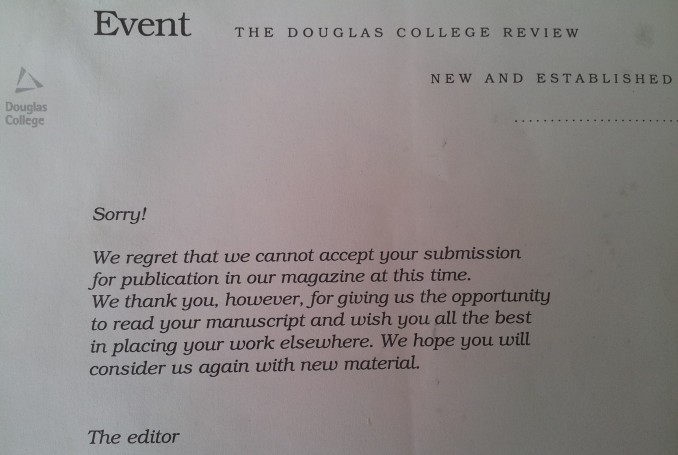
rejection letter

This is a standard rejection letter, from one of those highbrow literary journals that almost all writers dream of getting published in, but that very few people actually read.  I’ve got millions of these forms lying around, from all the lousy short stories I sent out over the years.

Every one of those letters stung.   But as Pablo pointed out in the race, pain can be instructive.

If you’re going to be a writer, you’ll have to deal with rejection at some point.  But you can view these rejections in one of two ways:

1) You can see them as stop signs.  As brick walls.

2) Or you can see them as an invitation to keep pushing.

If you’re suffering from hypothermia, or excruciating chafing, by all means, take some time off to recover.  Otherwise, keep writing.  The finish line is out there – somewhere.
Polishing the Turd

Which is harder: running a 100-mile race, or writing a novel about it?

A lof of people have asked me this question.  I wasn’t sure how to answer it at first.  “Both nearly killed me!” I blurted out.

Now I have a more thoughtful answer. Both the race, and the book, caused me a TON of pain. But the race only lasted 24 hours. The book, on the other hand, took years to write.

Let me put it another way. A week after I ran the race, my body had recovered and I was bounding around like a gazelle. A week after I wrote the book, I was weeping inconsolably while I plowed through the first of thirteen rewrites.

What to do, what to do... (1)

Funny thing about pain though. Once it’s gone, you forget how much it hurt.

I’m working on my second novel now, and ERMAGHERD – why am I doing this to myself?

Writing a first draft is more painful than sitting through an Optimist Club luncheon. You have to create worlds, map out settings, shape plotlines, and stuff your characters full of strengths and flaws and anxieties and senses of humour. HARD!

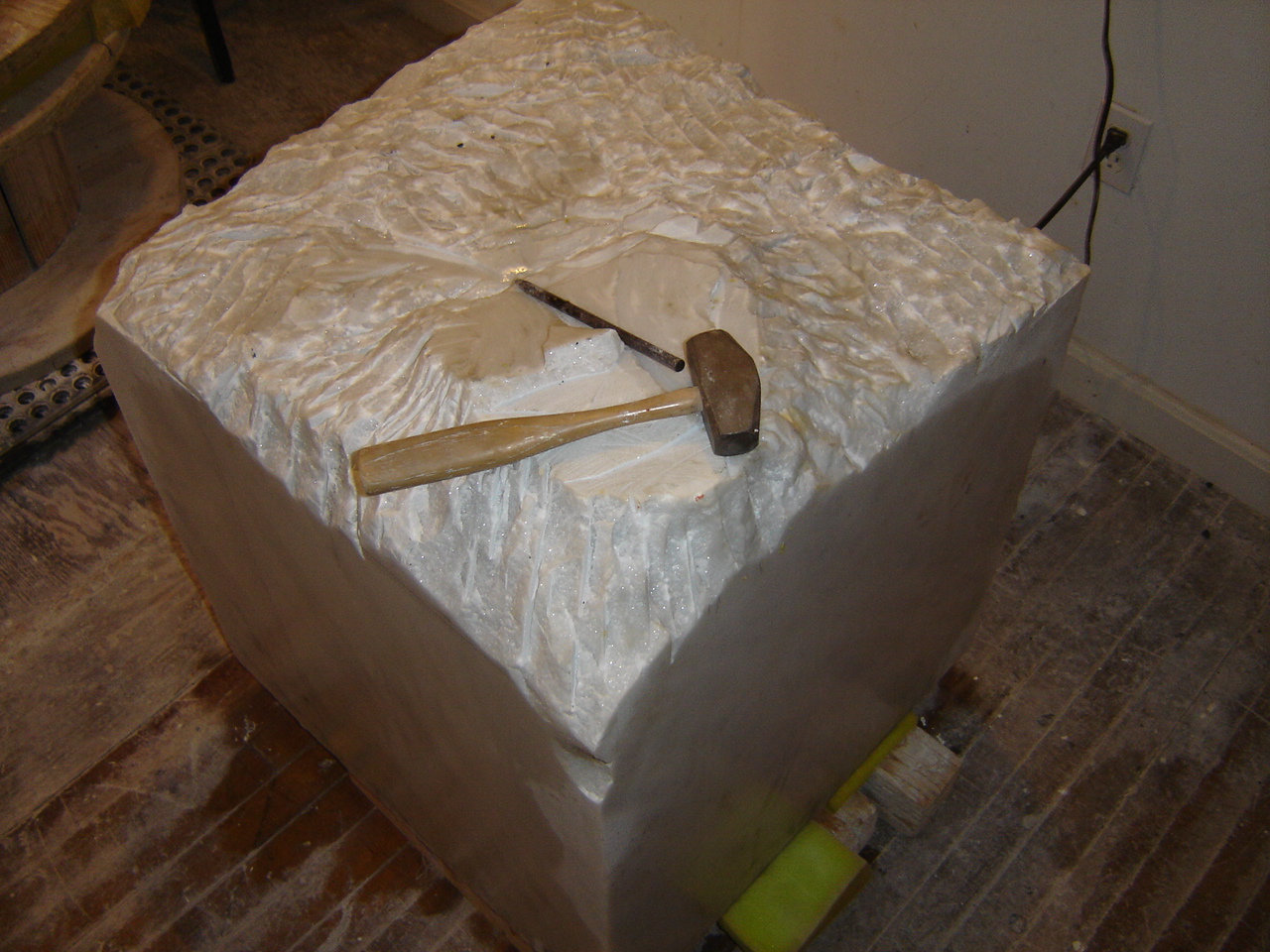
Worst of all, when you finish the first draft, you’ll read it over and discover that it’s an 80,000 word turd.

marble

Okay, maybe that’s a bad choice of words. Let’s call it a hunk of marble instead. Either way, it’s massive chunk of verbiage that you’ll be chipping away at for the next two years, or roughly 1/50th OF YOUR LIFE.

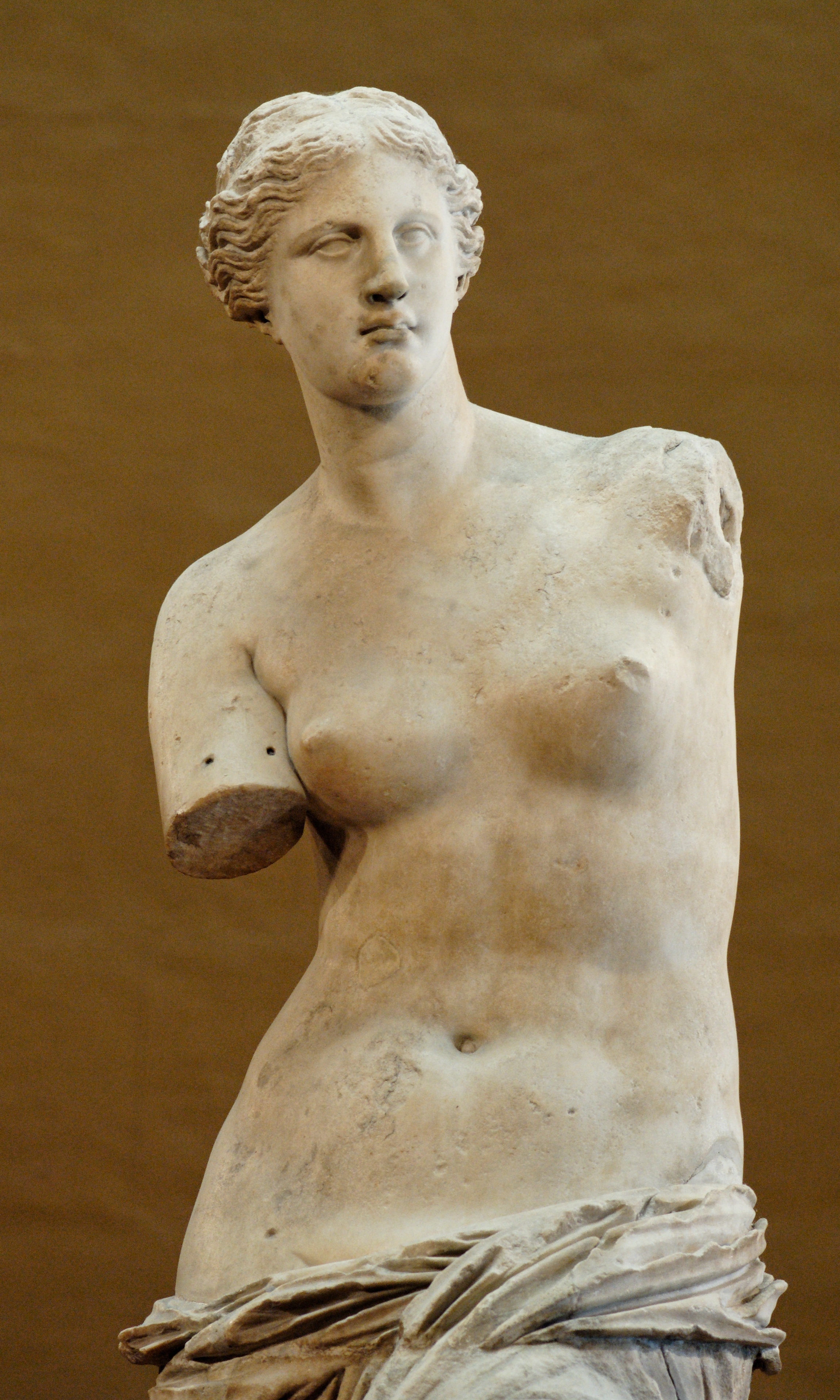
Relax, Dave. Breathe deep. With luck, that turd block of marble will one day look like this:

Venus_de_Milo_Louvre_Ma399_n3

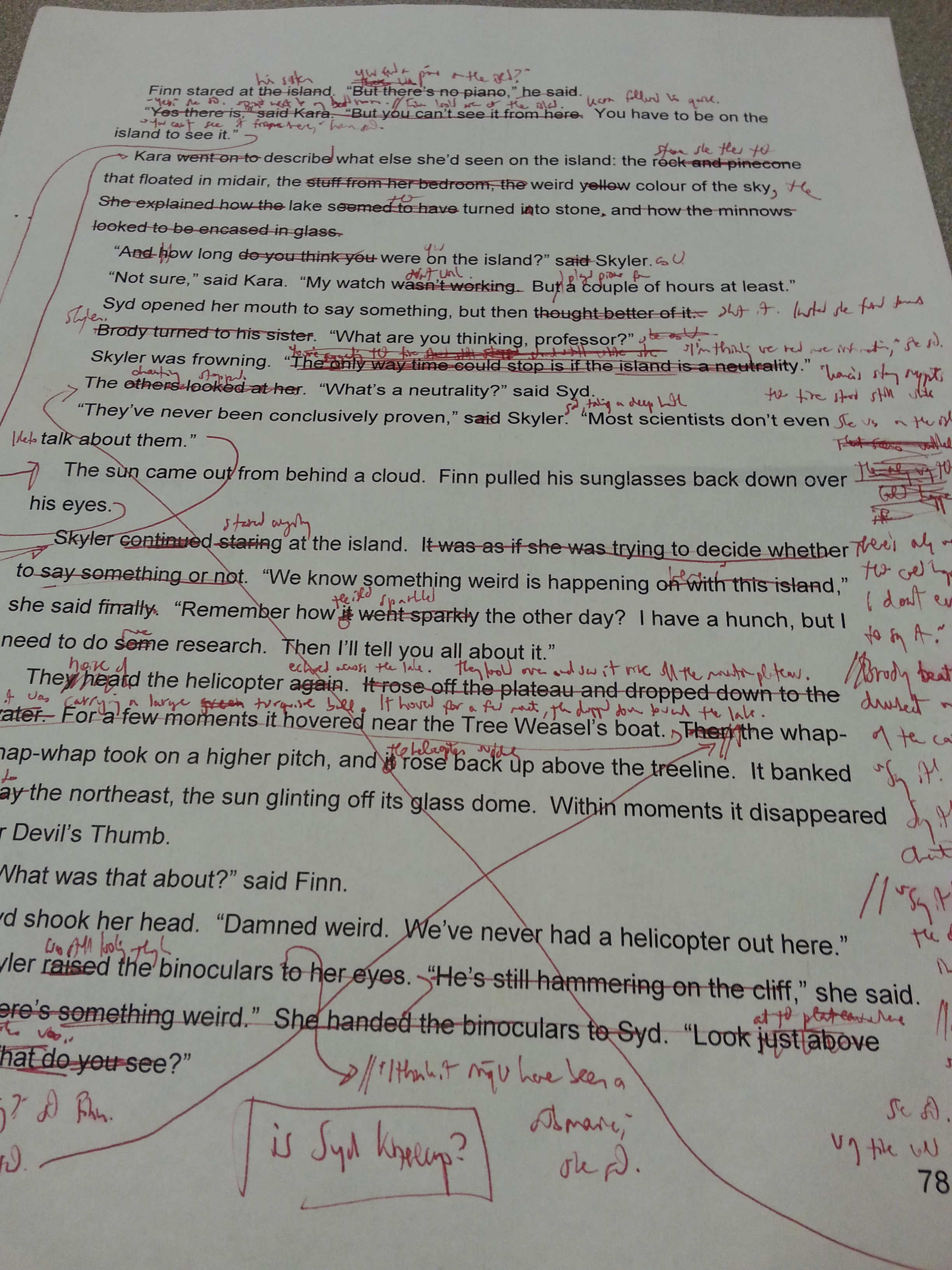
I finished the second draft of this novel in July. It was 64,000 words back then. Now, 4 months later, I’ve whittled it down to 54,000 words, and I’m hoping to cut 9,000 more before I’m done. With every sentence I delete, the manuscript gets leaner and better. Nothing makes me happier than a page that looks like this.

rewriting clockwatcher

How “Sydney” and “Ollie” Came to Life

first copy of Ultra

“Ultra – the novel”

There it is. It’s 192 pages long. Weighs 396 grams. And it costs less than a fancy Starbucks coffee.

Talk about a bargain! You might enjoy your Starbucks coffee for 20 minutes. This book, on the other hand, will warm your heart forever.

Why? Because it’s fortified with ten essential characters. Including one who was inspired by this young woman:

Sydney Watson Walters

Sydney, aka “Sydney Watson Walters”

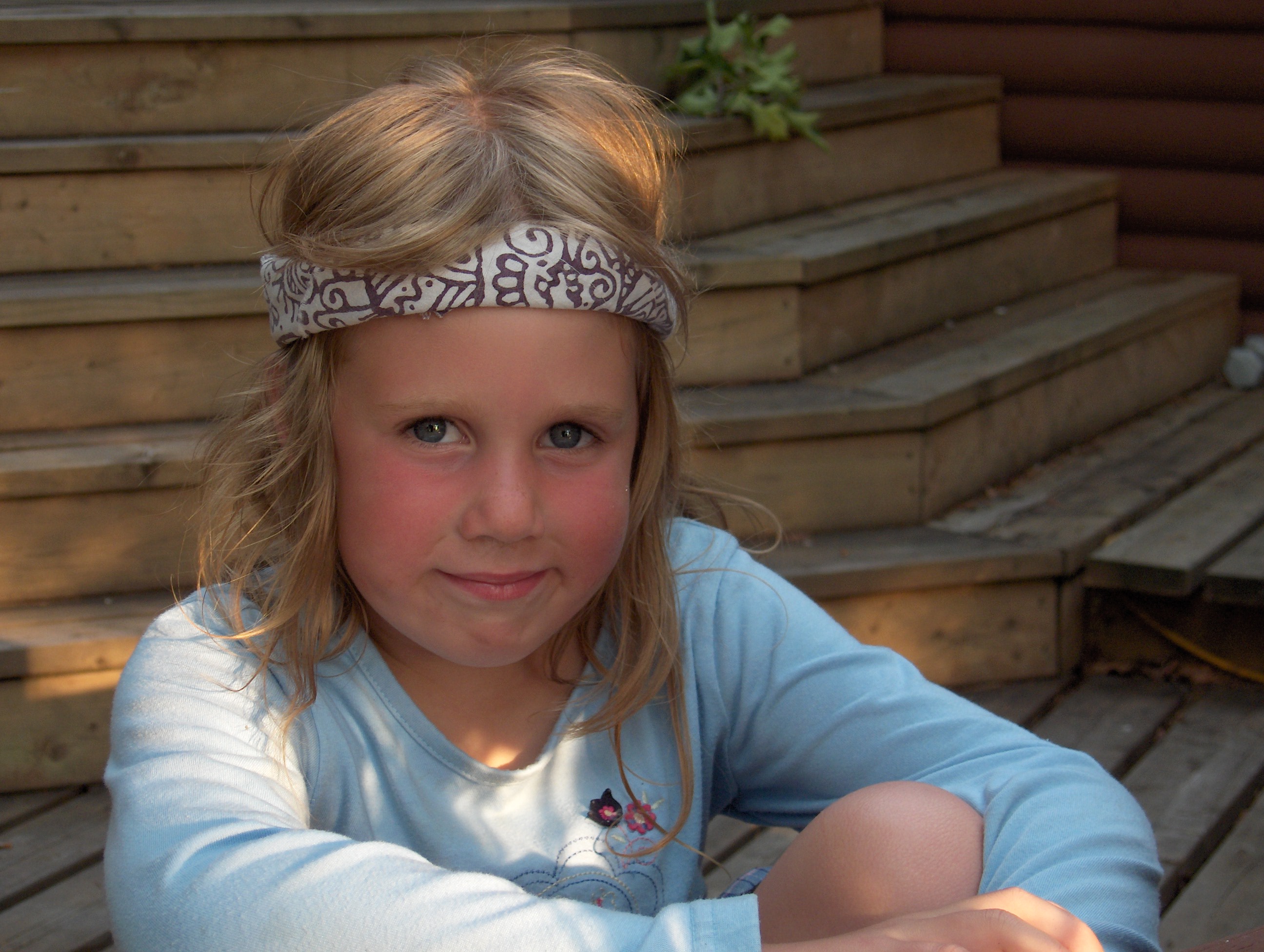
Say hello my niece Sydney. She was five years old when this picture was taken (she’s grown since then, and is now in grade nine). She plays basketball and volleyball, and sings and plays guitar. She’s also, believe it or not, one of the world’s coolest aunts.

How did someone so young inspire a literary character? A character who bears a strong resemblance to Oprah Winfrey?

A couple of years ago, when I was still struggling with the book, I called Syd and asked her for some advice. “I’m going to read you a couple of pages,” I warned her.  “Tell me if the dialogue sounds okay.”

I started reading.  I got halfway though one page when Syd said: “Kids don’t talk like that.”

“Really?” I said. “How do they talk?”

“Like kids,” she said.

Syd offered all sorts of good suggestions. She also asked me a LOT of questions. She said: “What are you trying to do with this scene?”  And, “Am I supposed to like Quinn now? Because I don’t. He’s being a dink. Kneecap needs to tell him to smarten up.”

Re-writing a book is kind of like running on the same stretch of trail over and over. If you’re not careful, you’ll wear the trail down so much that you’re running in a deep trench, and you can’t see over the sides anymore. Syd reached into the trench and pulled me out. Then she sent me down a more interesting path.

Those conversations I had with Syd helped the book A LOT. And I’ll never forget the tough questions Syd posed. She reminded me a bit of a TV journalist. Which is why I borrowed her name for the Sydney Watson Walters character.

SWW

Here’s another family member who inspired a character:

Oliver posing

In the book, Quinn has a little brother named Ollie. Ollie acts as Quinn’s “pacer” during the race. He calls Quinn at all hours of the day and night, and recites crazy jokes to cheer him up. Most importantly, on page 171, Ollie utters a six-word sentence that literally saves Quinn’s race.

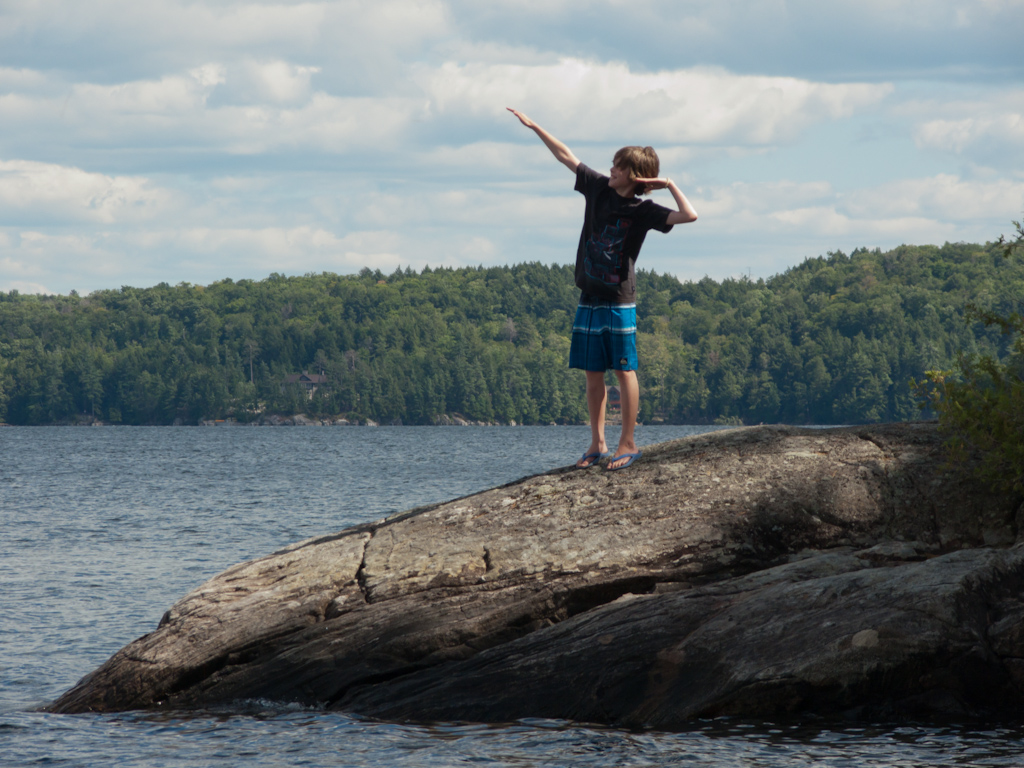
I based this funny and wise character on my real-life nephew, Oliver. That’s him above, doing his best Usain Bolt.

Years ago, when I was running the Sulphur Springs 100-mile race, Oliver called me on the phone to wish me luck. It was close to midnight, and I’d run 84 miles.  The moon was out, and I was feeling shockwaves of pain, which isn’t unusual when you’re that far into a race. Still, it was a tough spell, and I felt like I was going to throw up.

I can still remember exactly what Oliver said. He said: “Seriously, Uncle Dave? You’ve run 84 miles already? But it’s not even midnight!  You’re doing great!”

Be careful when you use words of kindness like that. You might just find yourself in a book.

Holy Trailballs it’s Winter Already!

Running has given me so much over the years.  My health, lots of crazy adventures, a clusterbomb of crazy friends. But running gave me another life-changing gift – one I hadn’t thought much about until today.

cropped-david-half-marathon-peterborough-2008.jpg

Years ago, before I took up running, I was one of those people who hated winter.  I spent five months of every year feeling vaguely depressed, and waiting for April to roll around.

Today it’s minus fifteen outside the cabin. Six inches of hard-pack snow lie on the ground. A howling northerly whips ice pellets through the forest, so of course I think: Time for a run!

I pull my tights over my long-johns. Yank on two pairs of thermal socks, then my Nikes. Compression top, followed by 3 dry-wick jerseys. Running jacket with drawstring hoodie. Two hats, one neck-warmer, one MEC neoprene face-shield, lobster claw gloves.

I step outside into the howling gale. Run down the concession, straight into the wind. The snow rises up like sheets of vinyl siding, and pours through the woodlots in dry white rivers. Ice pellets hit my forehead like they’ve been fired from a staple gun and then they’re welded to my eyelashes like pebbled glass.

I run on a mountain bike trail named HolyFBalls. It’s a brute at the best of times, and the snow only makes it tougher. And yet – wrapped in my cocoon of synthetic fibres, I feel the bodychoke of winter, but not its cold bite. The world looks more beautiful than a brand new iPhone, and instead of feeling depressed, my heart explodes like a confetti cannon.

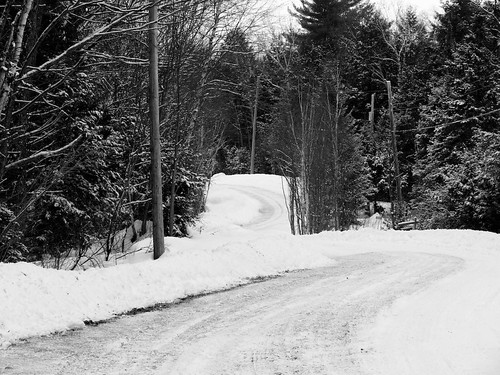
Around the bends

This is the greatest thing running gave me. It coated my heart with crystal water. It made me love winter.

You’re the Inspiration!

How do authors come up with their characters? We dream them up in our heads, right?

Sorta. But not exactly.

If you’ve read my novel “Ultra” then you already know that the main character is a 13 year-old kid named Quinn. But here’s something you may not know: I have a nephew who’s also named Quinn.

Quinn (age 4) and David

Quinn (age 4) and David

There he is. The boy who inspired the character. He’s just a tiny kidling in this picture, but he’s 12 now.

So – how did that adorable little kid inspire the tough-as-nails ultra-runner in the book?

Easy. He’s super-fit. He’s wickedly funny. And he’s determined as anything – just look at those clenched fists! Also, my nephew loves the outdoors, and is always chasing after animals. Which is why, in the book, Quinn is always running into frogs and turtles and, er, bears.

Illustration (by Shawna) from an early version of the book

Illustration (by Shawna) from an early version of the book

Unlike the character in the book, however, my nephew isn’t all that keen on running. (He’s far more interested in soccer and hockey.) And unlike his brooding namesake in the book, the real-life Quinn is most definitely NOT a fun vampire. He’s actually the opposite. More like a fun volcano.

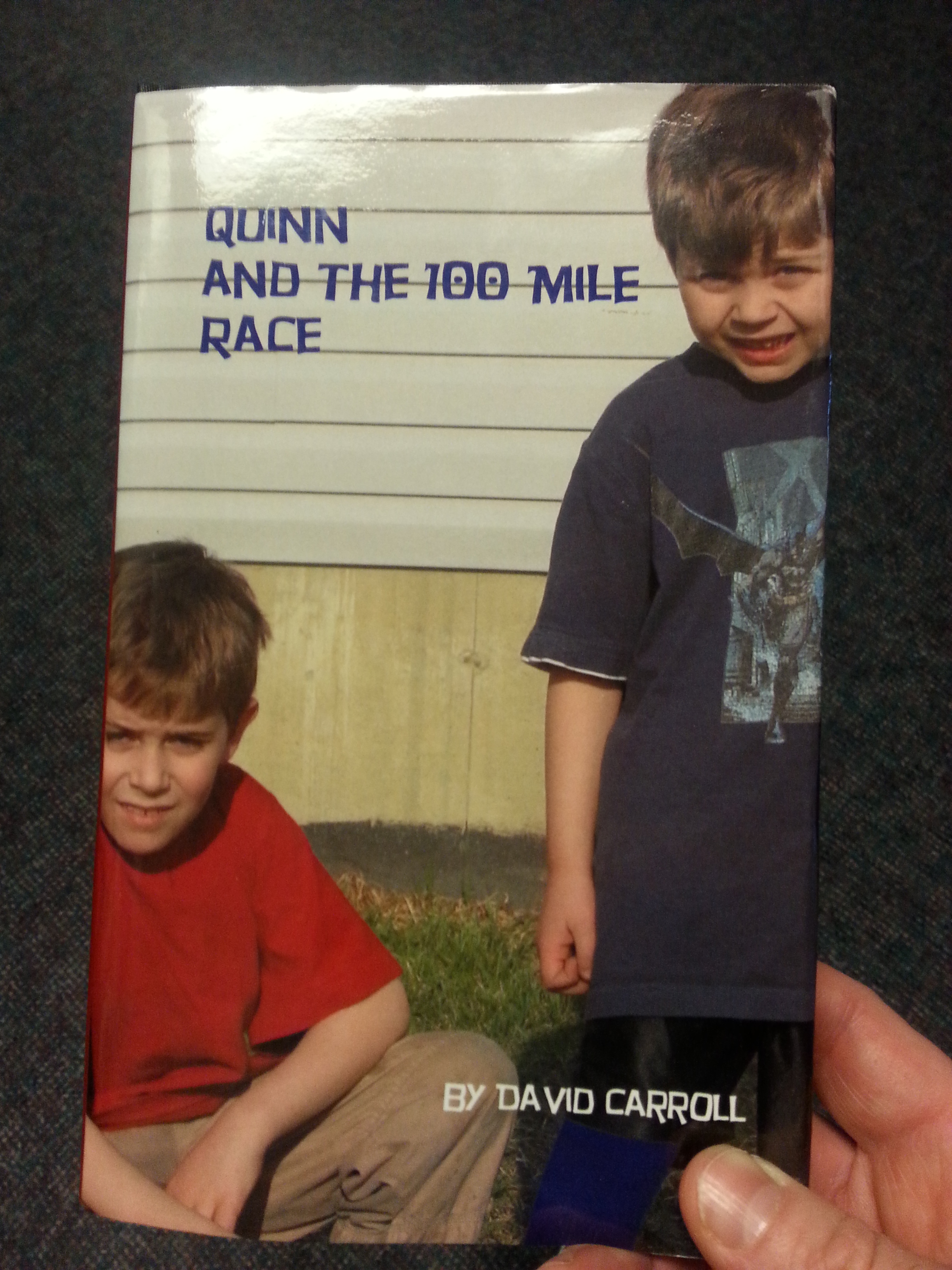
20131126_074358

That’s an early version of the book. Back then it was titled “Quinn and the 100 Mile Race.” That’s Quinn on the right, and his big brother Kiernan on the left. And yes, Kiernan inspired a character too.

At the bottom of page 86, a tough old guy named Kern comes ambling down the trail. He’s what’s known in racing circles as a “bandit” – someone who runs the race illegally. But this bandit isn’t evil. Quite the contrary – he actually ends up saving Quinn’s race.

I wrote Kern into the story as a tribute to all big brothers and sisters. As annoying as they can be on occasion, elder siblings can be life-savers. My own big brother rescued me from near-death countless times. I don’t doubt that Kiernan has done the same for Quinn.

Also worth nothing – Kiernan is an awesome hockey player. So I decided to make the “Kern” character a former hockey great. Like my nephew, I made him a goalie. In my mind, he was a superstar with the Alberta Junior Hockey League.

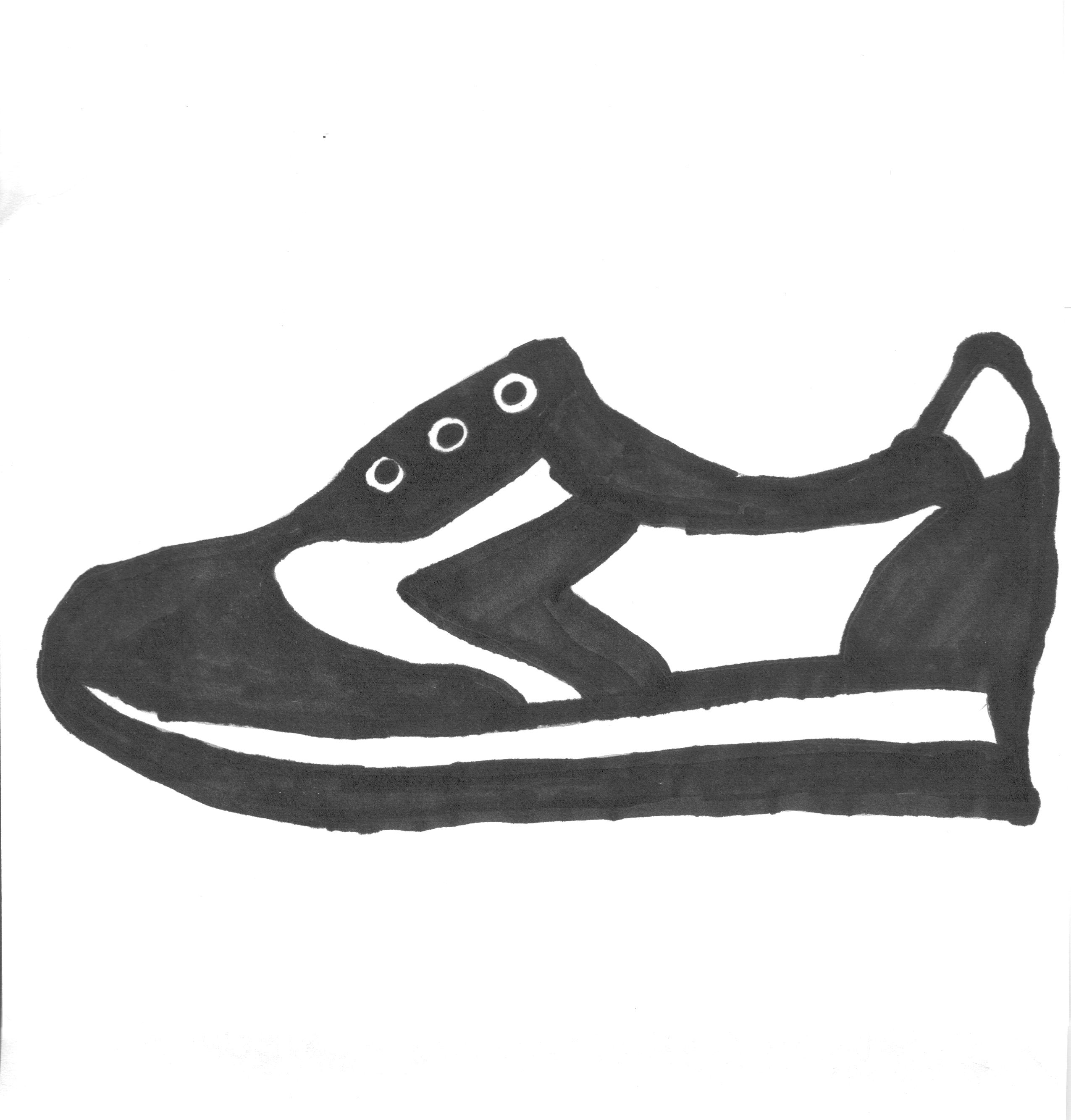
The "Terry Fox" shoe

The “Terry Fox” shoe

This is the best thing about being an author. You get to put all the people you love in a book. I’m especially lucky, since I have 40 neices and nephews to write about.  Like the one below.  Any guesses which character she inspired?

Sydney Watson Walters

How to Motivate Your Runner

If you’ve read my novel “Ultra,” you know all about pacers. Pacers are the lind-hearted lunatics who volunteer to “pace” runners for the final 20 or 30 miles of an ultra-marathon.

Being a pacer is a tough job. First, they have to run twenty or thirty miles – on forest trails, in the middle of the night.

They also need to open to abuse. Runners can get mean after 70+ miles.

Most of all, a good pacer needs to know when to push, and when to back off. On that front, here’s 90 seconds of solid advice.

You Don’t Have to be Great to Start…

I’ve been spending so much time lately going BLAH BLAH BLAH about running, I thought I should say a word about writing. After all, if there’s one thing I do more than run, it’s write. True story: after spending 8 hours writing for work, and another two or three hours on my novel, how do you suppose I like to relax in the evenings?

No, I do not yarnbomb neighbourhood stop signs with leg warmers. Instead, I chill out by writing in my journal.

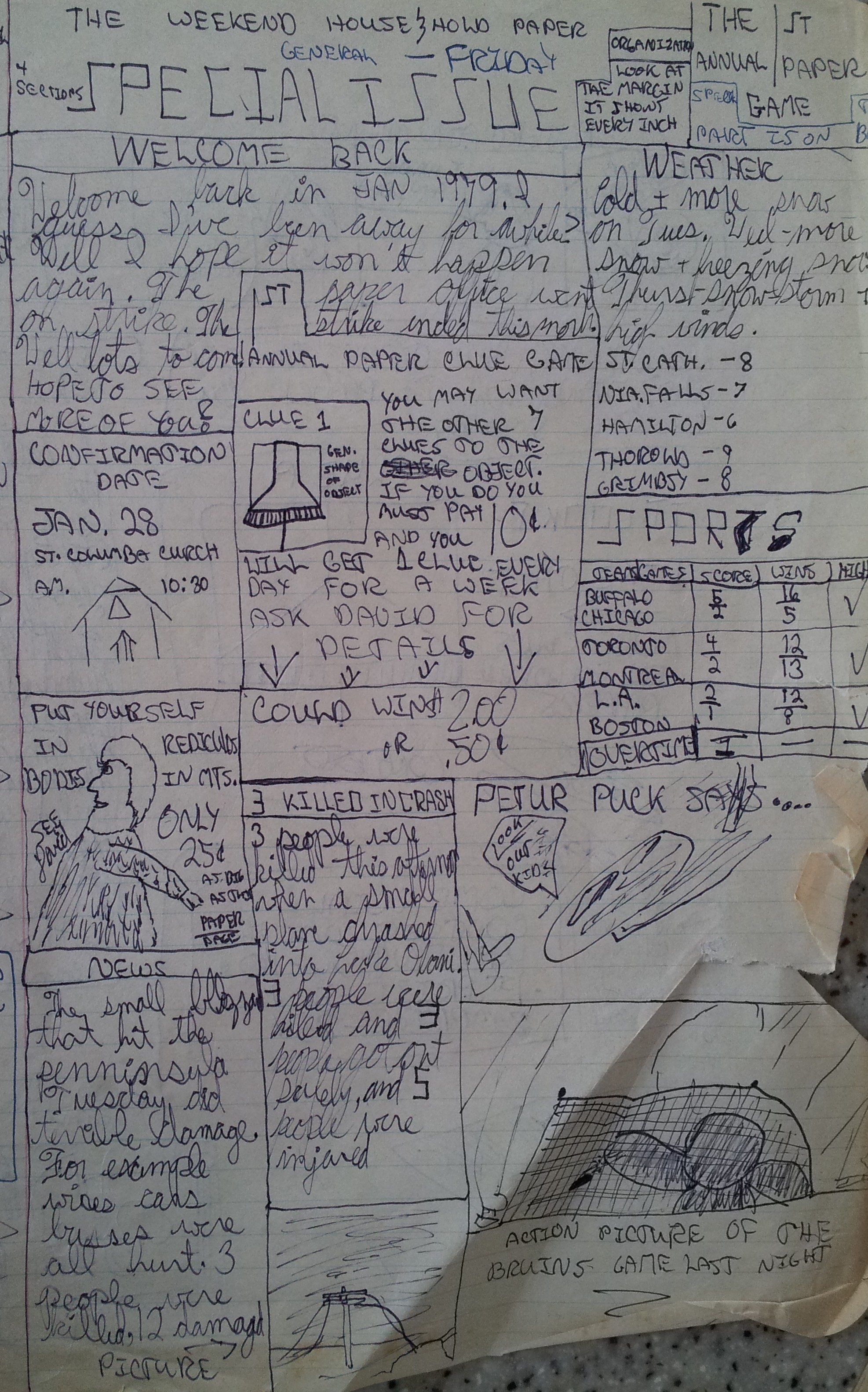
I caught the writing bug early. When I was nine, I started cranking out a weekly newspaper. It had a circulation of 5: my mom, my dad, my two brothers and me.  It looked like this:

weekend household paper 1

It was called The Weekend Household Paper. I wrote it because I was bored. And it’s a good thing too. If I hadn’t been bored enough to write that newspaper, I might never have started keeping a journal.

journals stacked

Just a few of the hundreds of journals I’ve filled over the years. Here are more, stuffed into a steamer trunk:

journals in trunk

I didn’t write anything brilliant in those journals.  Usually I just wrote about the weather, or what me and my friends were getting up to on our bikes. From time to time, I’d write a short story. And it’s a good thing I did. If I hadn’t written those short stories I wouldn’t have had anything to send out to highbrow literary magazines.

rejection letter 3

I have hundreds of rejection letters like that one. Each one of them stung, but they also taught me something important. They taught me that if I really wanted to get published, I’d have to work harder. Much harder.

So I bought a high-tech laptop computer –

Tandy computer

And set about writing 3 mediocre novels.

my 3 bad novels

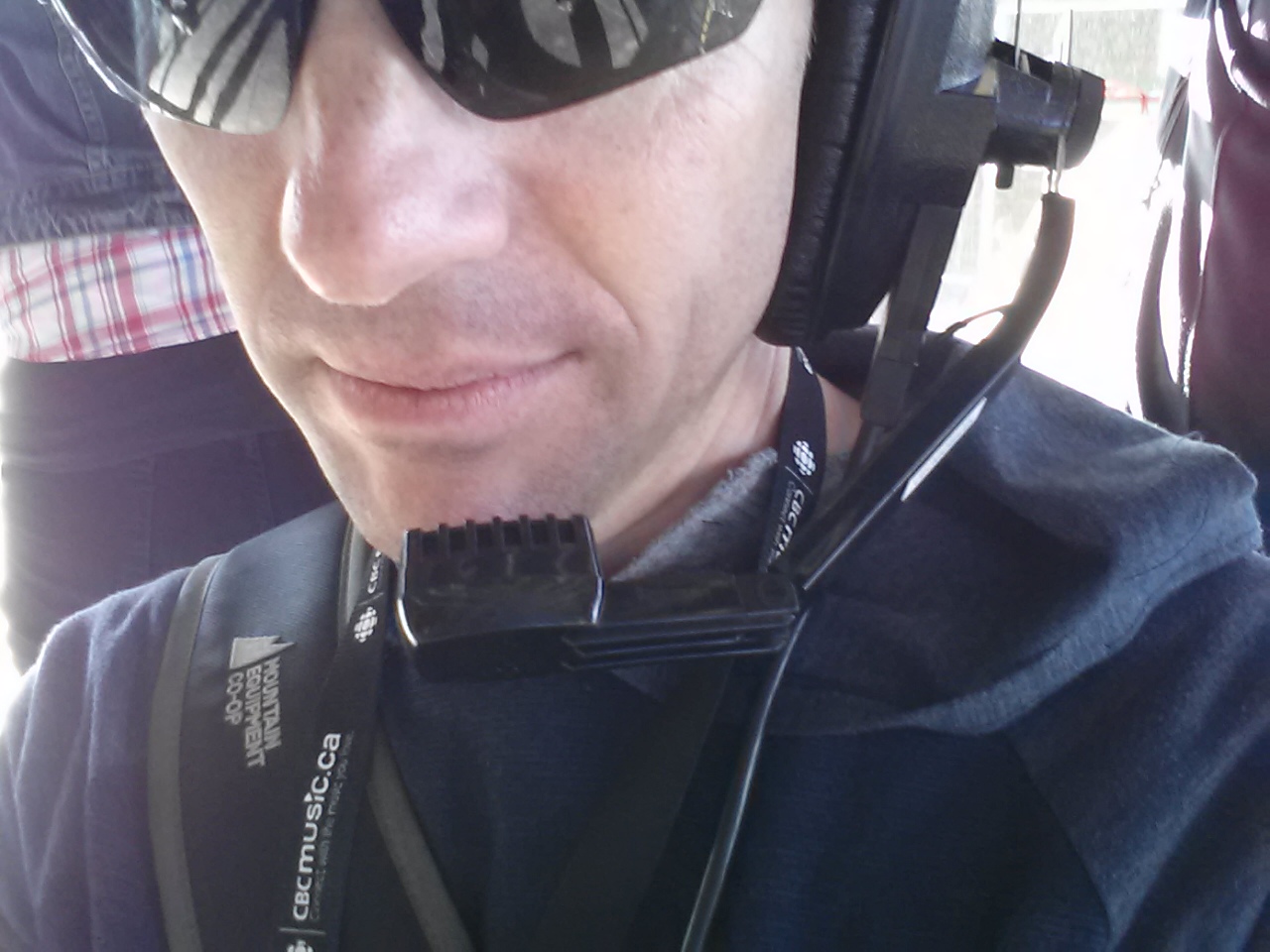
There they are. They all got rejected too. And it’s a good thing they did. If they hadn’t, I never would have gotten depressed and applied to the CBC for a real job – a job writing comedy shows and game shows and dressing up in funny outfits.

Me in headset

I wasn’t a great writer when I started at CBC, but a half million people were tuning in to the show I was working on, so I had no choice – I had to get better. And it’s a good thing I did, because (A) I got to keep my job, and (B) when a good idea for a novel finally occurred to me, I had enough writing experience to write it half decently…

writing floating island story

That’s me, working on my second book, which I’m hoping will get published in another year or two. Some days I’m not so sure, though. Even though I’ve been writing for years, my first drafts always look like crap. Here’s a page I worked on last night:

Copy of rewrite - floating island

I rewrote my first novel 11 times. I expect my second will take at least as much work, if not more.

Happily, with every rewrite, the story gets better. And it’s always worth it when you cross the finish line. (YESSSSS! Managed to sneak in a running reference after all!)

first copy of Ultra

Remember: You don’t have to be great to start.  But you have to start to be great.

Ultra Good News!

Lots of great things have been happening with the novel. A couple of weeks ago, it was nominated for the Ontario Library Association’s Silver Birch Award. And this morning I woke up to this amazing review in Trail Running magazine, written by the astonishingly perceptive Isabelle East, an 11 year-old trail runner in Alberta:

From this month's Trail Running Canada magazine

From this month’s Trail Running Canada magazine