Going Long. Too Long.

We runners love to set goals.  Drop a few pounds; shave a few minutes off a PR, improve our finishing kick.  We set expectations, and then we go out and exceed them.  Except for those rare occasions when we don’t.

A couple of years ago,  I decided to run 4000 kilometres.  Why 4000?  I’m not sure.  It felt like a big, braggable number.  And it was just slightly beyond my comfort zone.  Previously, the most I’d ever run in a year was 3500 kilometres.

A few facts about running 4000 kilometres:

In order to cover 4000 kilometres in a year, you must run 11k each and every day.

If you take a day off, you’ll need to run 22k on some subsequent day to make it up.

If you get sick, and miss a week of running, you’re on the hook for eighty clicks.

It quickly became clear that my whimsical little goal would require some careful planning.  I’d need to pay attention to diet, sleep, hydration, injury prevention, stretching, recovery, supplements, etc.  In short, I would need to become the most BORING person on the face of the planet.

I’m sorry to report, that’s exactly what happened.

I suffered injuries, I got sick, and I spent the entire year obsessively totaling my mileage.  As the months went by, I became more and more depressed.  I didn’t understand what was happening to me at the time, but I do now.  I spent the whole year staring at the odometer instead of the gorgeous scenery I was running past.

“You used to be a peddler of joy,” Shawna said towards the end of the year. “But you’ve turned into a fun vacuum.”

Haliburton10-8303

On the last day of the year, December 31st, I was 6 kilometer shy of my goal. I’d run 3994 kilometers in 364 days.  In the month of December alone, I’d run 600 kilometers.

It was a sunny and dry day, and there was no physical reason why I shouldn’t have pulled on my gear and dashed off the final 6 km to meet my goal.

And yet, I didn’t.

Why?

Years before, at a marathon, I’d seen a man cross the finish line, check his watch, and then yell – at the top of his lungs – the raunchiest  swear word known to humankind.  You know the one.  I pledged then and there that I would never become that guy; I would never put goals and numbers ahead of my love of the sport.

It was a tough decision to make, and I felt conflicted about it.  But later that night I went to a New Year’s party.  10 p.m. came and went, and not only was I still conscious; I was laughing and telling stories, and actually having fun for a change!  I was so bubbly, so full of spunk; I didn’t know what to make of myself.

“I can’t believe I’m awake,” I said to Shawna.

“Welcome back to the world,” she replied.
Repeat to Failure

I’ve been upping my mileage lately.  I’ve got a 50-mile race coming up in July, and my usual 100-mile “fun run” in September.  Let the training begin!

I love the extra hours outside, but I’m having trouble keeping my weight up. Yesterday, in the span of five minutes, three different people expressed concern about my evaporating waistline.  They looked startled by my appearance – as if I were a mangy stray who’d left an unwanted deposit on their front lawn.

David Carroll running-3

The trouble is, I can’t eat enough food to keep pace with my caloric output.  60 miles per week = roughly 6000 extra calories burned.  That’s a lot of fettuccine alfredo.

My friend Paul tells me I should be cross training more.  Paul is a weight lifter, and he keeps promoting this thing called “repeat to failure.”

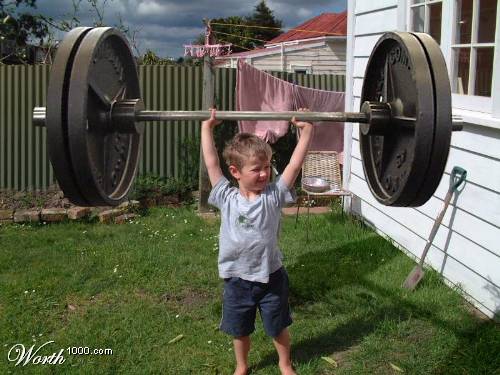
four-hour-body-weight-lifting

You wouldn’t think that weight-lifters are the smartest people.  Paul, for instance, spends most of his free time grunting and lifting impossibly heavy discs.  And yet, weight-lifters have somehow come up with one of the most brilliant concepts of all time.

Repeat to Failure basically means you lift the maximum amount of weight possible – for a limited number of repetitions.  Whereas you might normally lift a 20-pound weight fifteen times, with repeat to failure, you’d lift double the weight – but only for five or six reps.  The idea is to stress your muscles to the point of collapse while also – and this is the tricky part – avoiding injury.

Yes, there’s pain involved.  But, as my friend Paul points out, pain is how you grow.

“Every time I lift a massive weight over my head, I’m literally shredding my back and neck his muscles,” Paul told me. “But later on, scar tissue will grow on top of those damaged muscles.  And guess what that scar tissue will turn into?  Bigger muscles!”

Repeat to Failure strikes me as a wonderful metaphor for life.  Why tread on familiar ground, over and over?  We only grow by pushing ourselves beyond our comfort zones.  And the moment of our greatest failure can lead us to the threshold of our greatest success.

This is true whether you’re a weight-lifter, or a runner, or a writer, or a knitter, or a photographer, or a snake charmer or a Minecraft player.  We only get better by taking on bigger and heavier challenges.  And as much as the failures hurt, they almost always make us stronger.

Failures aren’t failures.  They’re stepping stones to success.

Recovery Run

Sometimes it’s a good idea to slow down when you’re running.  Surprising things happen – when you take the time to look.

So it was last Saturday – April 20  – and I was on a relaxing, recovery run IN A SNOWSTORM!!!  The snow was pounding down, and the country roads were greasy.  Totally uninspiring day for a run.  But I stuck with it, and did the full 21 kilometer loop around Beals Lake.  I didn’t go fast, maybe 7 mph, but the effort felt hard, and my spit tasted like rust.  So I took a break.

Beals Lake is long and narrow, with a series of bulbs that, on Google Earth, make it look like a weird necklace.  You can’t see it from the roads, and the only way to get a glimpse of it is to trespass onto private property.  So I followed an old cart track, hopped over a rusty metal gate, and walked down to the shore.  A thick grey mist hung over the pine trees at the water’s edge.  A thin crust of ice covered most of the lake, like the skin on mushroom soup after its cooled.  I could hear the tinkling of ice cubes in the water.

Then I heard a sploosh.  Not a splash, but a sploosh.  There’s a difference.  Splashes happen when something enters the water.  Splooshes mean something is emerging from the water.

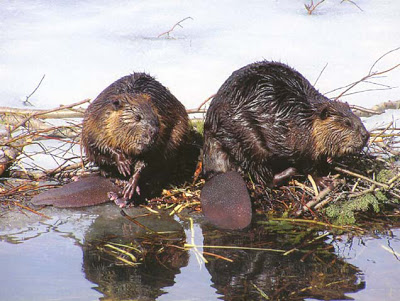
beavers3

Suddenly I saw a beaver.  Correction: two beavers.  They circled around each other, then dove back under the water.

They re-surfaced a few moments later, fifteen feet to my right.  One of the beavers waddled ashore, and began gnawing on a branch.

CRUNCH!  CRUNCH!  CRUNCH!

The beaver had no idea that I was there!  The second beaver dove back under the water, and then re-surfaced somewhere to my left.  It too crept onto the shore and began chewing on a branch.

CRUNCH!  CRUNCH!  CRUNCH! to my left.

CRUNCH!  CRUNCH!  CRUNCH!  to my right.

I stood there, watching them, for close to an hour.  When I finally got home, the snow had stopped falling.  The Spring Peepers were singing joyfully in the bog.  They were so loud, I had to cover my ears.

Mother Nature knows it’s springtime, even if we don’t.

Coming Soon – My New Novel About Running

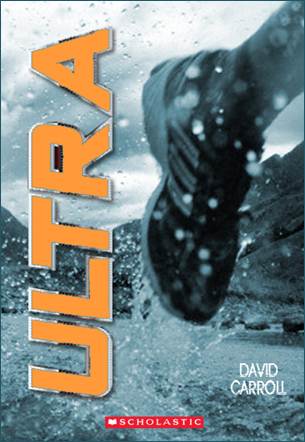
Ultra cover

The 100 mile race is a harsh and hostile immensity, and to take it on is to enter a war.

ULTRA is the story of Quinn’s war.  A war against fatigue, despair, dehydration, wild animals, hallucinations, and a dangerous family secret.

It’ll be published by Scholastic in September.

Ultra

Real-Life Superheroes, part 6

Whether you’re a runner looking for inspiration, or a writer looking for a story, this post may just help you out…

BHVlIirCMAATclw

The Boston Marathon takes place on Monday.  I won’t be running it this year, which breaks my heart.  That race is more fun than…jeez…a barrel of monkeys?  A trampoline of hamsters?  A terrarium of Bearded Dragons?

hopkintonIt’s crazy fun, that’s what it is.

My favourite Boston memory? Hmmm, let’s see…

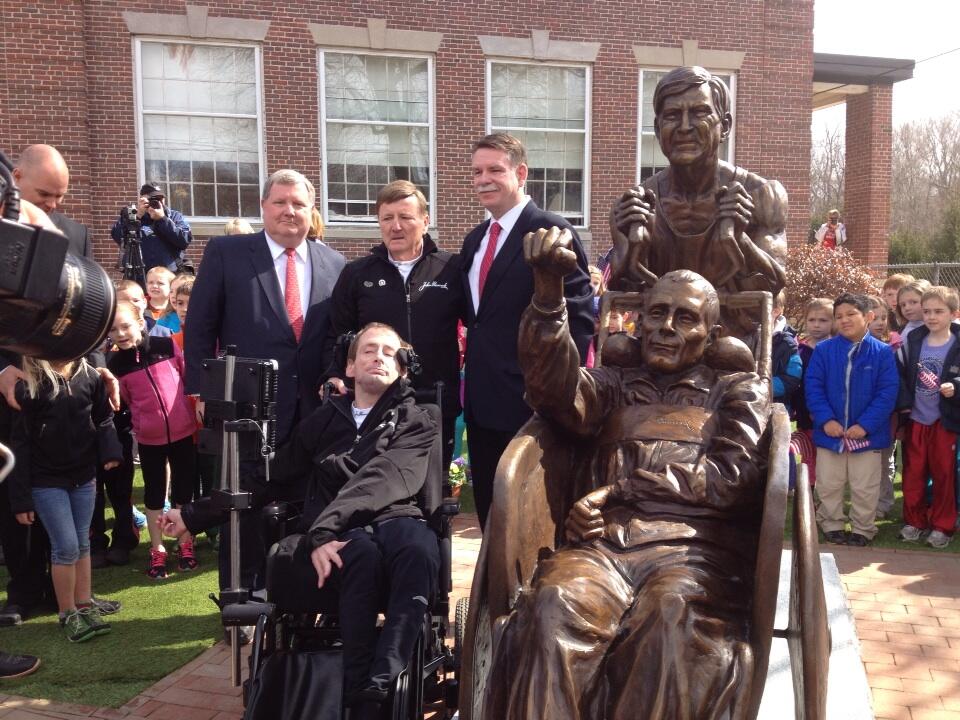
One time I found myself running alongside a heavyset man.  He was running at a fast clip, which was amazing, considering that he was pushing a weird wheelchair/stroller contraption.  A young man was reclined in the stroller, and he was grinning at the huge crowds that had gathered on both sides of the road. Everyone went ballistic as these two guys passed by.  It was like they were rock stars or something.

That was six years ago.  It’s one of the great regrets of my life that I HAD NO IDEA who Rick and Dick Hoyt were.  But I know who they are now.  As do millions and millions of others.

They aren’t rock stars, of course.  They’re something much better.  They’re a father and a son, and more importantly – A TEAM.  And they’re a reminder of the good that any of us can do in this world:

Believe me, it’s worth the plane fare to Boston – just to cheer these two heroes on.

Running with Borscht

The symptoms are unmistakable.  You’ve forgotten your kids’ names.  The family dog hates your guts.  And you’re getting bad vibes from that person in the kitchen who you suspect you may have married at some point.

I hate to be the one to break the bad news, but you’ve got an advanced case of Runner’s Guilt.  It’s a common affliction at this time of year, what with 20-mile long runs pre-empting our family responsibilities.

Happily, there’s a simple treatment for this scourge.  It’s called THINKING ABOUT OTHER PEOPLE FOR A CHANGE!

Here’s what you do.  First, draw up a list of the people in your life who are suffering.  Any kind of ailment will do – a layoff, hip replacement, a bad break-up, etc.  Enter the addresses of these afflicted souls into Google Maps.  Plot a course that equals your training distance, then run!

Note: while it’s important to stop and say hello to each of these afflicted friends, try to avoid prolonged conversations.  Yes, you’re on a charitable mission, but it’s equally important to keep your heart rate elevated.  By all means, give your friends a supportive hug, but don’t stop running for more than two or three minutes.

One other thing – and this part is crucial – you must impart a small gift to each of your friends.

The ideal gift is small and light; something that’s easy to carry during your run.  Gift certificates are perfect.  So are thumb drives full of music.  Packets of heirloom seeds will delight the green thumbs among your friends.

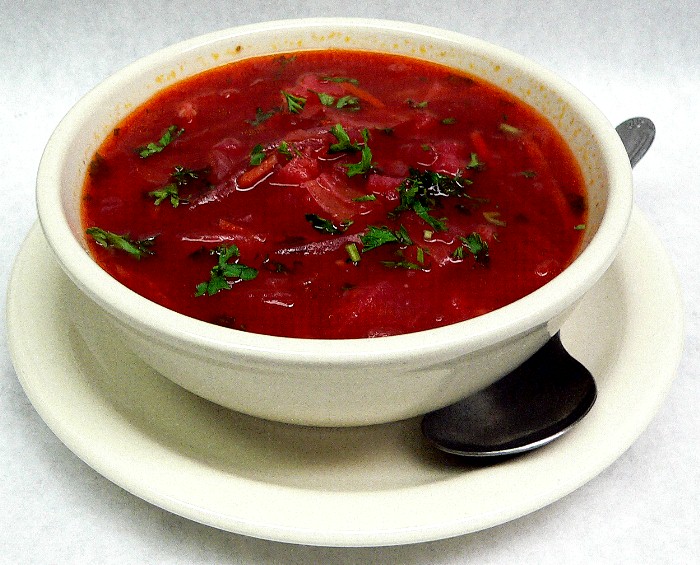
Then again, if you’re feeling especially generous, you can always deliver jars of Russian Cabbage Borscht.

borscht

A cautionary note: 1500 millilitres of Russian Cabbage Borscht weighs just over six pounds.  Three Mason jars full, swaddled in a bath towel and crammed tightly into a running backpack, weigh roughly the same as 8 litres of milk.

How do I know this?  I know this because I delivered that precise volume to a number of friends during a recent 35-mile training run (I’m prepping for a 100-miler).  Sounds insane, I know.  But to my credit, I  planned the run so that I’d unload the first jar fairly early in the run.  That is to say, at mile 19.

“It smells a bit like armpit,” my friend Farhad said, unscrewing the lid and taking a sniff.  (Farhad’s recovering from a nasty case of Shingles.)

“It’s better when you heat it up,” I said.

I’m not really sure what I was thinking with the borscht.  Borscht is a healing food; full of every colourful vegetable known to humankind.  Vanity also played a role, no doubt.  For years, Russian Cabbage Borscht has been my “thing.”  I make it with lots of sour cream and dill.  Blend it until it’s velvet.

Farhad dipped in a finger and took a taste.  “It tastes like dirt.  Really good dirt.”